Class Set Optics 2.0
Experimental Study of Ray Optics with LED and Laser
School level: Secondary education
Number of students: 12–18 students in 6 parallel working groups of 2–3 students
Use: Student experiments on ray optics in small groups
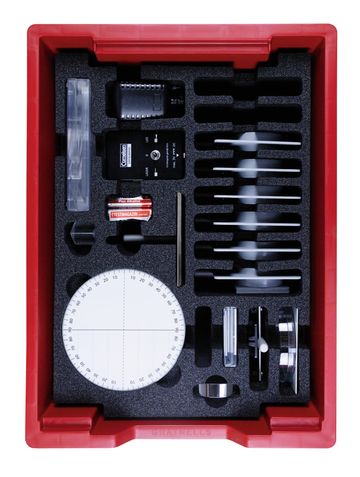
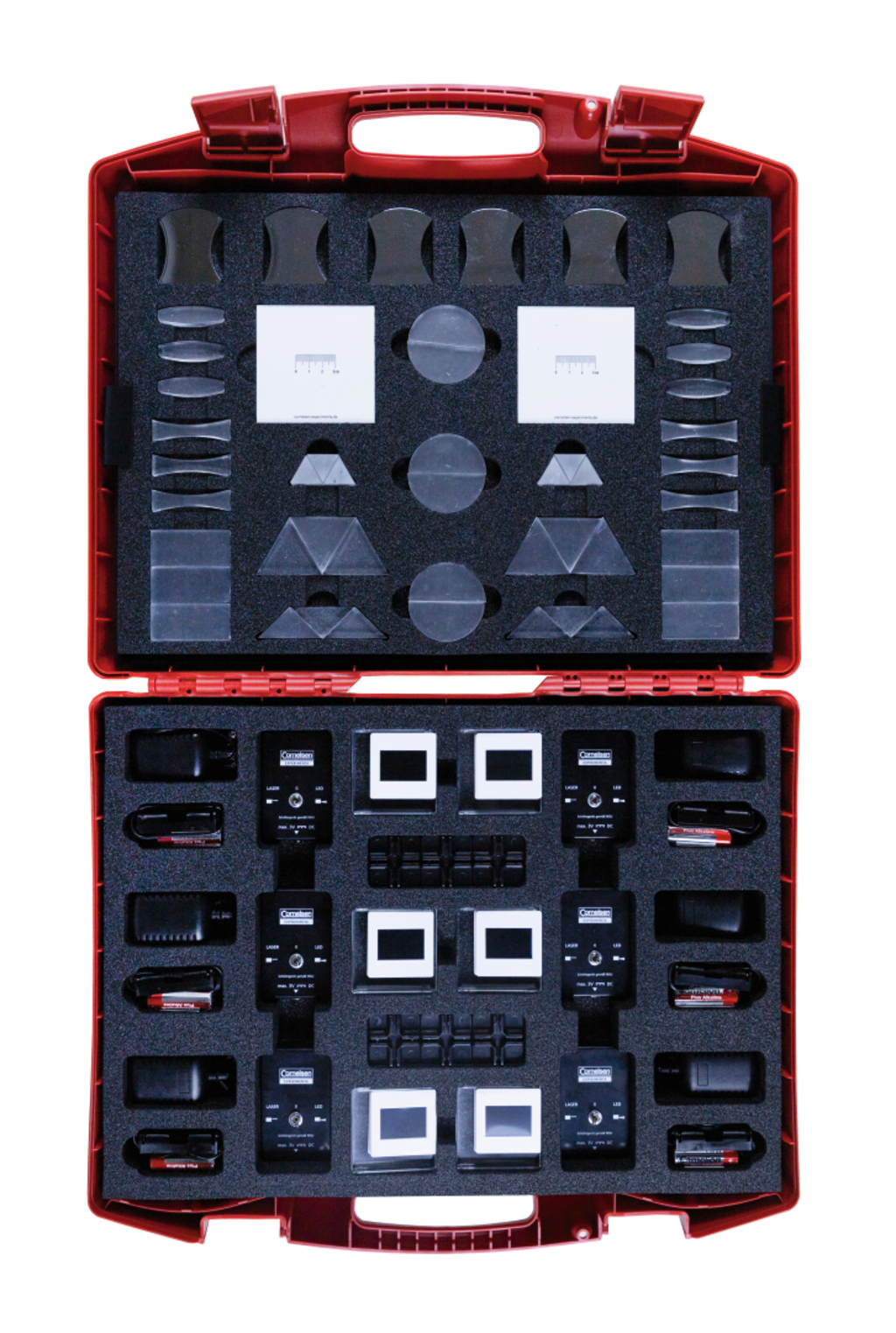
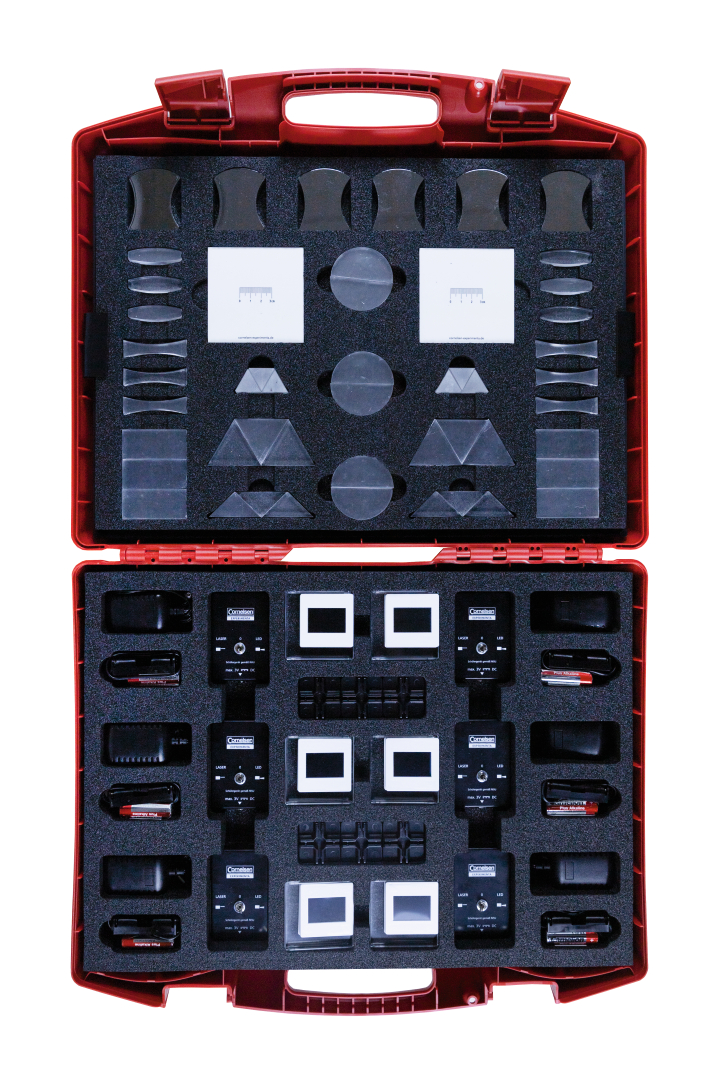
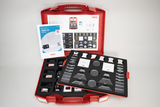
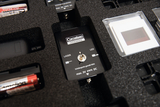
The Class set Optics 2.0 enables students to carry out experiments on key topics in ray optics in six parallel working groups. The RiSu-certified student light source combines an LED and Class 1 laser in a single unit. Thanks to the LED's very low heat generation, the experiments can also be carried out in rooms that are not darkened.
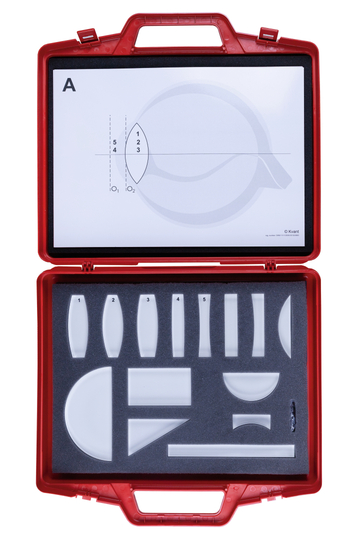
The experiments cover shadow formation, reflection and the law of reflection, refraction and Snell's law, Fermat's principle, as well as ray paths through convex and concave lenses. Further experiments deal with determining the focal point and splitting LED light into its spectral colours using a prism.
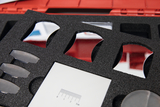
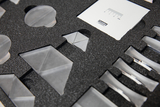
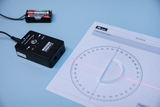
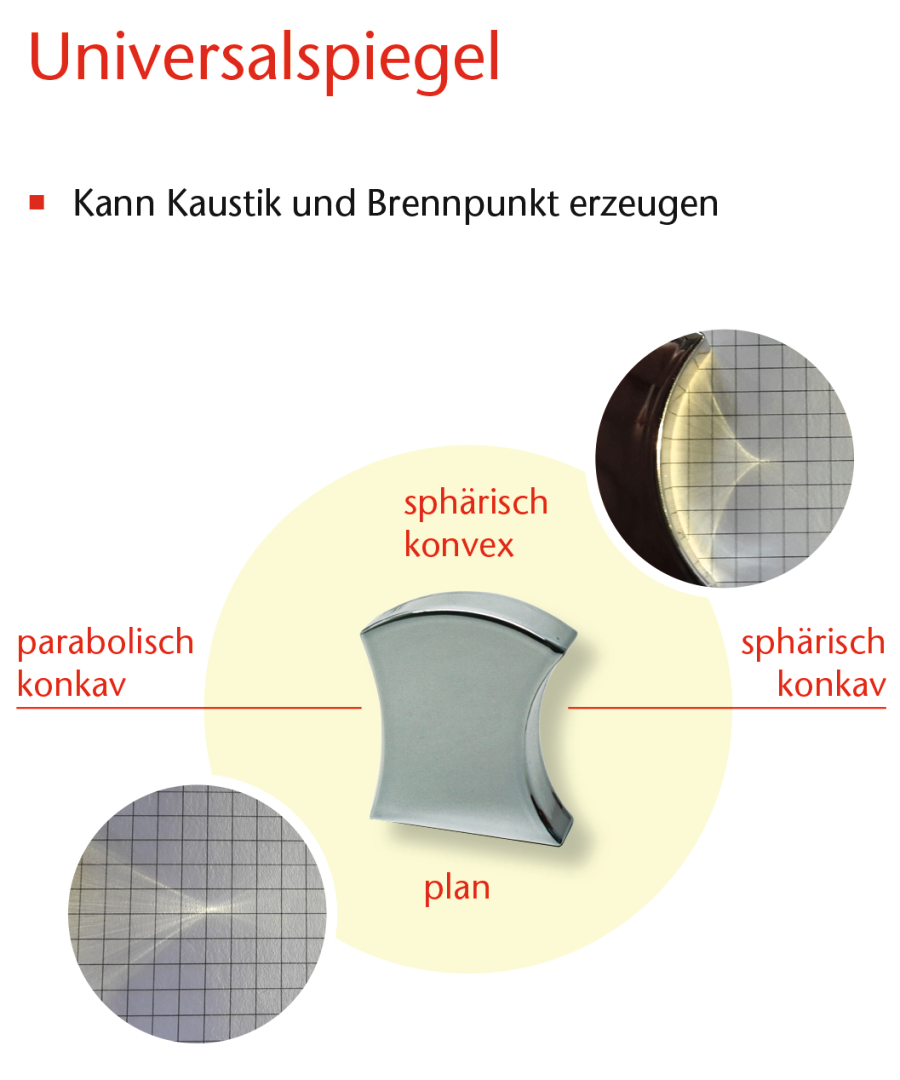
High-quality optical components and a universal mirror with parabolic concave, spherical concave, spherical convex and plane reflecting surfaces enable a variety of experimental setups. A measuring sheet with an angular scale allows the angles of incidence and reflection to be read directly.
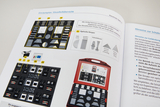
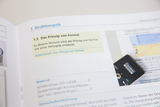
Student worksheets are also available as editable Word files for free download. Each experiment includes an equipment list, instructions for conducting the experiment, evaluation materials and practical tips. A comprehensive guide supports the preparation and performance of the experiments.
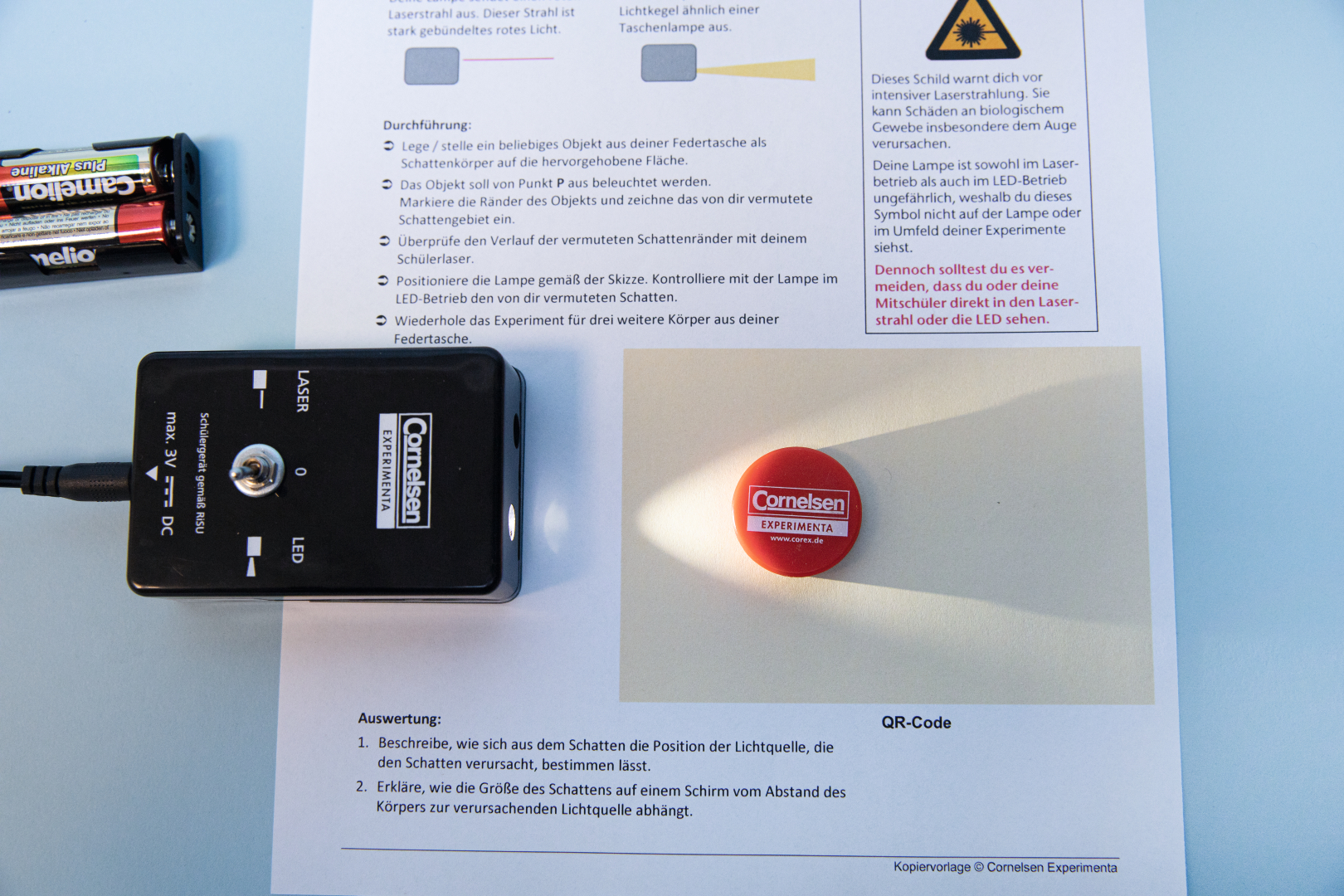
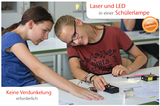
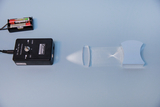
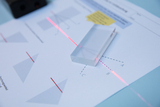


With the laser and the LED of the student lamp as well as the associated worksheet, the formation of shadows as a stitching optics is investigated.
The law of reflection is discovered with the laser of the student lamp on the measuring table.
The reflection of a parallel beam of light is reflected convex spherically, concavely spherically and concave parabolically on the surfaces. The test is carried out as a stitching optics.
The transition of light from air to glass is investigated. Snellius's law of refraction is discovered and the refractive index of air in glass is determined experimentally.
In this experiment, the principle of Fermat with a stitching optics is discovered.
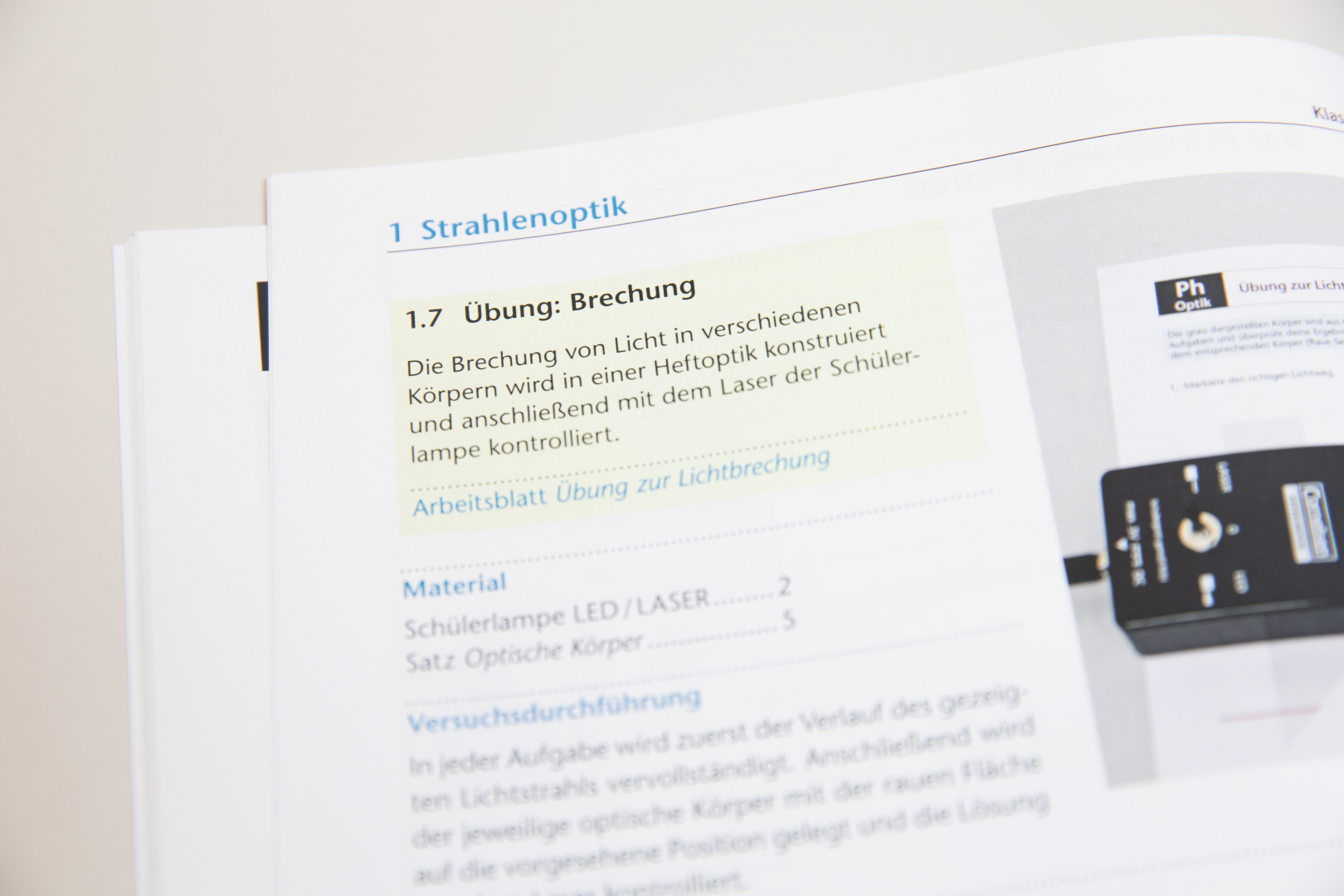
The refraction of light in different bodies is constructed in a stitching optic and then controlled with the laser of the student lamp.
The beam paths through convex and concave lenses are examined as stitching optics.
In two partial tests, the focal points of a cut-collecting lens with the stitching optics are first determined. The focal point of a lens on the optical bench is then measured.
The light of the LED is broken down into its spectral colors with a prism. The test is carried out as stitching optics.
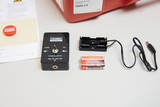
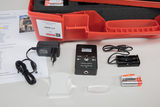
- 6 × Student lamp LED/LASER
- 1 ×
- 6 × Colour filters, primary red, green, blue
- 6 × Battery holder
- 6 × Power supply unit, 3 V/1 A
- 6 × Set of 6 optical bodies
- 3 × AA battery, 1.5 V, alkaline
- 6 × Screen, white, with scale
- 6 × Prism, equilateral, 25 x 25 mm
- 6 × Universal mirror
- 6 × Cross base
- 1 ×
- 1 ×
- 1 ×