DynaMot – Hand-Operated Generator
Generate Electricity Manually and Explore Energy Conversion
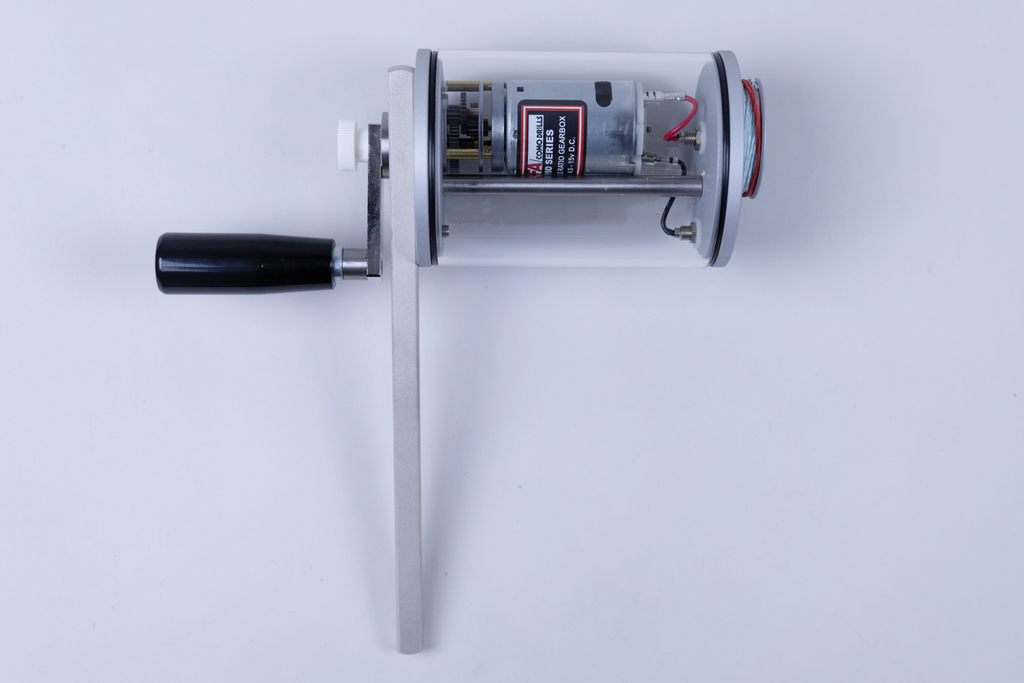
The DynaMot is far more than a simple hand-operated generator. As a versatile educational device, it enables students to investigate and understand fundamental concepts of electricity, energy conversion and electrical engineering through hands-on experimentation.
By generating electrical energy with their own muscle power, learners directly experience the relationship between voltage, current, power and energy transfer. This practical approach helps students develop a deeper understanding of electrical circuits and energy flow.
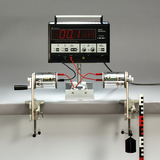
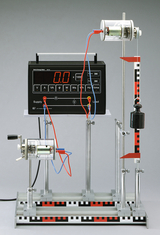
Integrated 4 mm connection sockets allow the DynaMot to be easily connected to lamps, motors, measuring instruments and other experimental components. This makes it suitable for a wide range of experiments involving series and parallel circuits, electrical power, generators and motors.
The device combines a powerful generator with a low-noise gearbox featuring a 30:1 transmission ratio. During manual operation, voltages of up to 8 V can be generated. At a crank speed that students can easily achieve, the generator typically produces 5–6 V, allowing many standard educational light bulbs to operate safely.
One of the key educational benefits of the DynaMot is that changes in electrical load can be physically felt while turning the crank. Students experience firsthand how increasing electrical demand requires greater mechanical effort, making energy conversion tangible and easy to understand.
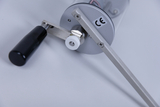
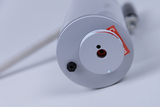
The DynaMot is short-circuit proof, robust and designed for everyday classroom use. Its transparent plexiglass housing, hand crank, integrated pulley and mounting rod make it an ideal tool for experiments in direct current electricity and energy transformation.
Typical Classroom Applications
- Understanding energy flow and electric current
- Measuring and comparing current, voltage and power
- Investigating series and parallel circuits
- Exploring the relationship between electrical and mechanical energy
- Studying the operation of generators and electric motors
- Developing a practical understanding of voltage and current concepts
Technical Specifications
Generator
- Rated Voltage: 12 V
- No-Load Speed: 14,500 rpm
- No-Load Current: 0.6 A
- Maximum Efficiency: 62%
- Output Power at Maximum Efficiency: 25 W
- Maximum Output Power: 38 W
Gearbox
- Gear Ratio: 30:1
Overall Assembly
- Weight: 800 g
- Dimensions: 240 × 150 × 80 mm
- Support Rod: 180 × 10 × 10 mm