eXperiBot Explorer
Teaching Programming and Robotics from Blockly to Python
Grade level: Grade 5 and above, with advanced applications for Grades 9–13
Programming: Blockly and direct programming with Python via Visual Studio Code
Use: Student projects on programming, robotics, sensors and algorithmic thinking, from block-based coding to text-based programming with Python
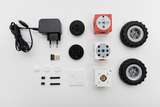
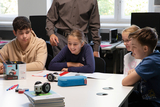
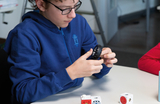
The eXperiBot Explorer is a compact educational robot designed for a practical introduction to programming and robotics. Its graphical programming environment makes it suitable for classroom use from Grade 5. Different learning levels allow the programming environment to be adapted to the students' existing knowledge.
With the free eXperiBot Blockly App, students create their first programs intuitively using drag and drop. Programs can be displayed both as blocks and in Python, providing a gradual transition from graphical to text-based programming.
For advanced students in Grades 9–13, the eXperiBot Explorer can also be programmed directly in Python via Visual Studio Code. This allows the educational robot to grow with students' programming skills and makes it suitable for both first coding experiences and more advanced programming projects.
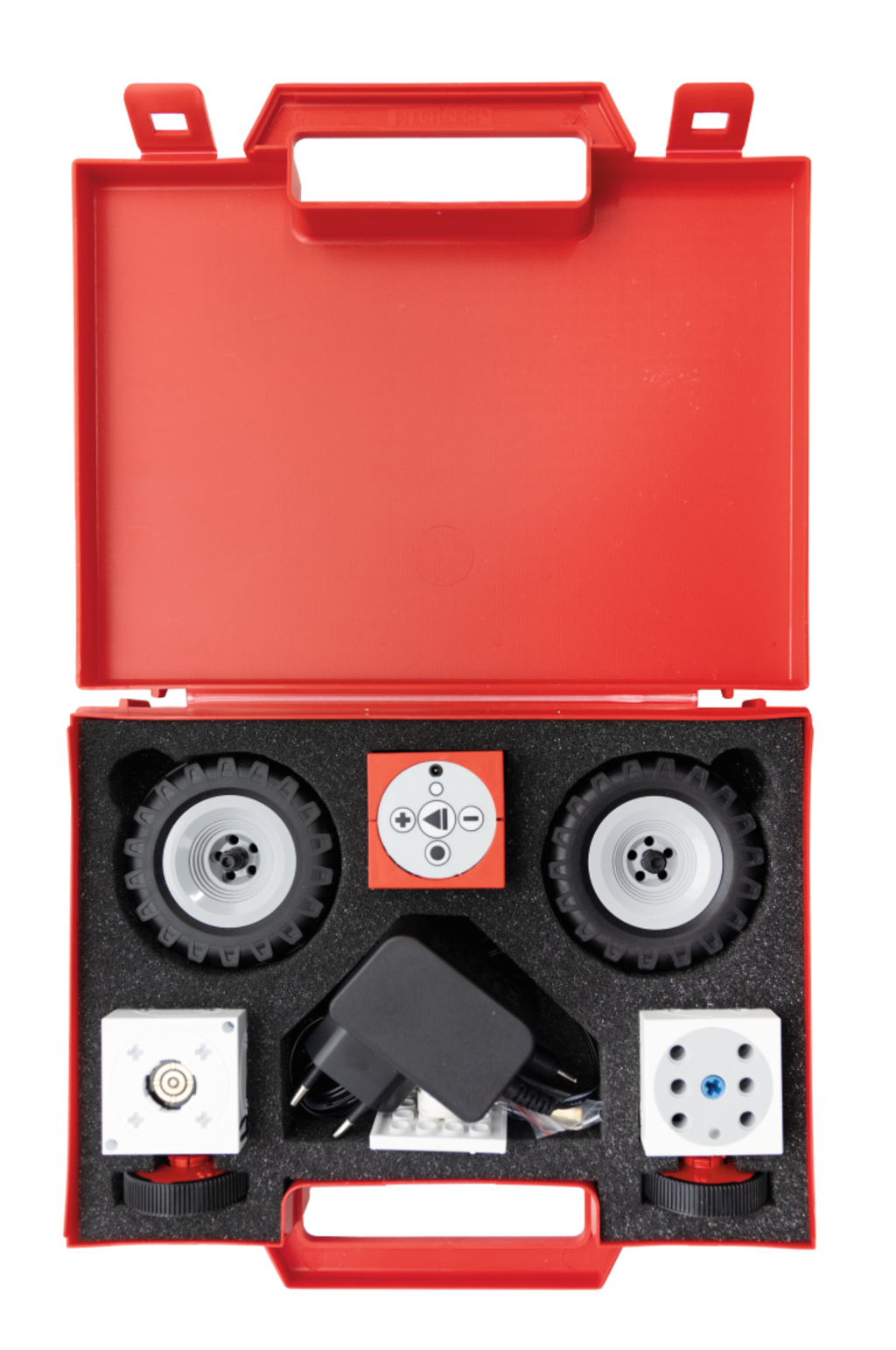
Two multisensors enable control using light, colour, distance and gyro data. Students can use these capabilities for a wide range of practical programming tasks, such as avoiding obstacles, following a line, recognising colours or programming specific driving movements.
In addition to guided learning units, the Creative Area provides inspiration for further projects and space for students to develop their own ideas. Students can design solutions, test programs and implement their own robotics projects. The eXperiBot teaching materials support step-by-step learning, independent activities and creative programming.
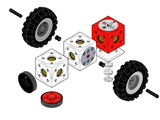
The hardware can also be expanded with components such as the Grabber, Twister, Pivot, Single Motor and LEGO® bricks, providing additional opportunities for technical and creative classroom projects.


The students give their eXperiBot instructions regarding direction, speed, and duration of movement.
The students program the eXperiBot to move back and forth between two stations, pausing briefly along the way.
The students learn how to give statements to their eXperiBot so that it drives a square.
The students learn to use their eXperiBot to explore its surroundings and autonomously navigate around obstacles.
The students program the eXperiBot to follow a line.
The students program the eXperiBot to recognize colors and respond with specific actions.
The students control their eXperiBot using simple hand movements, similar to a robotic pet.
- 1 ×

