eXperiBot Smart Team
Programming Automated Processes and Controlling Robots as a Team
Grade level: Grade 5 and above, with advanced applications for Grades 9–13
Programming: Blockly and direct programming with Python via Visual Studio Code
Use: Collaborative student projects on programming, robotics, automation and sensors using the Smart Factory, Smart Recycling and Smart Farming scenarios
With the eXperiBot Smart Team, students work on more complex programming, robotics and automation tasks in realistic scenarios. Smart Factory, Smart Recycling and Smart Farming provide three different project environments in which four cooperating robots perform individual tasks and work together as one functioning system.
Rather than programming each robot independently, students need to coordinate processes, distribute tasks and develop solutions together. The Smart Team therefore combines computer science skills with critical thinking, communication, creativity and genuine collaboration. Additional tasks for individual robots allow the level of difficulty to be adapted to different learning needs.
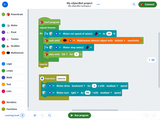
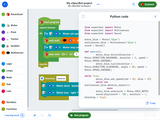
Students begin programming with the free eXperiBot Blockly App. Graphical code blocks are combined using drag and drop and can immediately be tested with the robots. The underlying Python code can also be displayed, while different learning levels allow activities to be adapted to students' existing knowledge.
For advanced students in Grades 9–13, the eXperiBots can also be programmed directly in Python via Visual Studio Code. This enables students to develop more complex algorithms, automated processes and their own robotics solutions. The Smart Team is therefore suitable both for introducing programming and for more advanced computer science and robotics projects.
The Creative Area extends the predefined scenarios with inspiring project ideas and provides space for students to develop their own concepts. Students can modify existing solutions, create new challenges for the robots and implement their own automation projects.
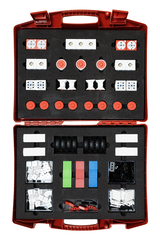
The system includes a range of electrical and mechanical components such as motors, multisensors, Cubes, Grabbers, Twisters and Pivots. LEGO® bricks can also be integrated using the adapter plate. Comprehensive teaching materials, lesson plans, assembly instructions and programming tasks support both teachers and students throughout the projects.
Scenarios
- Smart Factory
Students program transport, gripping and sorting robots to investigate automated and energy-efficient processes in a smart factory. - Smart Recycling
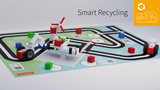
Students program collecting, gripping and sorting robots to recreate automated and sustainable recycling processes. - Smart Farming
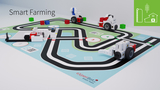
Weeding, planting and irrigation robots introduce students to automated and sustainable processes in modern agriculture.
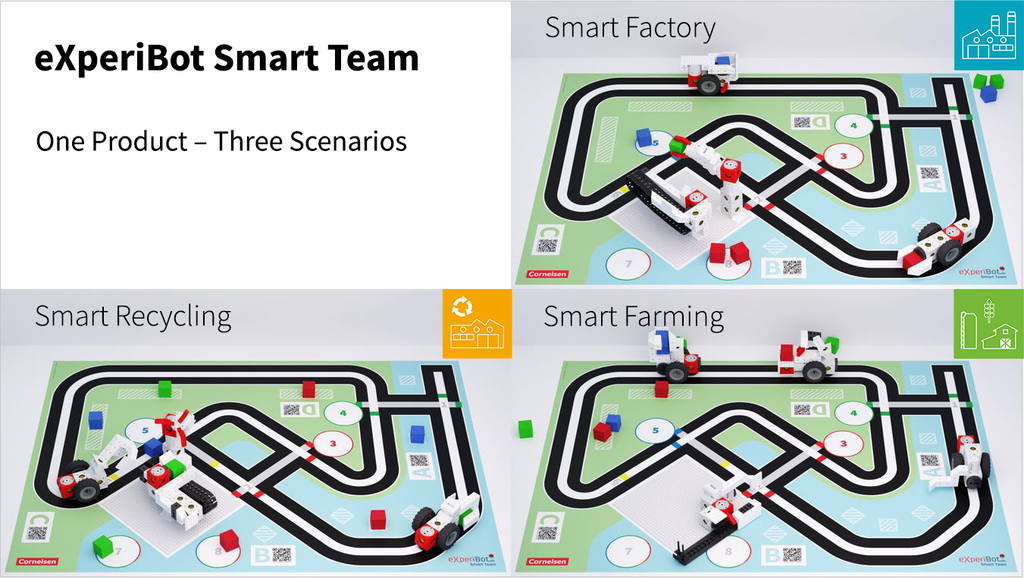
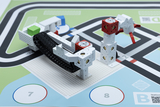
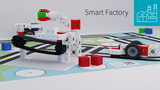


The students program transport, gripping, and sorting robots to gain insight into automated and energy‑efficient processes in a smart factory.
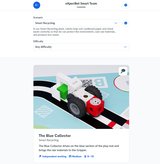
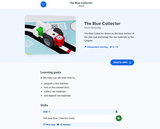
The students gain insight into automated and sustainable recycling processes by programming collection, gripping, and sorting robots.
The students gain insight into automated and sustainable smart farming processes by programming weeding, planting, and irrigation robots.