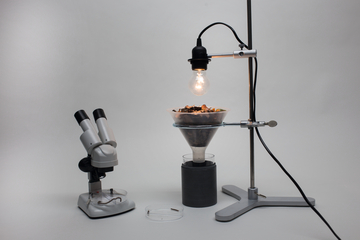
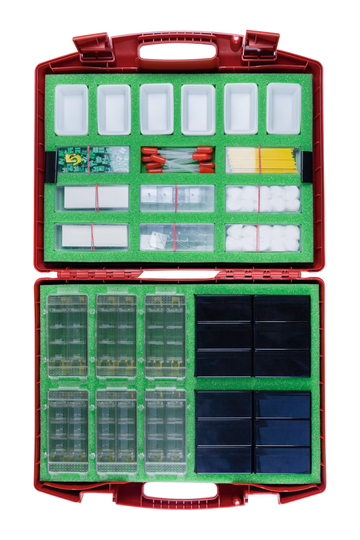
Students kit Biology
Hands-on investigating, preparing and microscopy
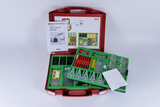
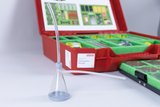
With the Students kit Biology, students can carry out a variety of practical investigations and experiments in biology lessons. The class set is suitable for students aged 13 to 18 and contains materials for 15 work groups with a total of up to 30 students.
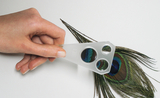
The included equipment offers a wide range of applications and supports independent scientific work. Students can observe objects with a magnifying glass, collect small organisms, and prepare and press plant and animal specimens. They can also prepare and examine microscope slides.
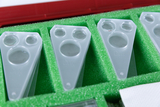
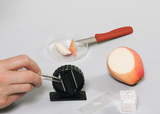
Thin sections can also be prepared: The microtome enables suitable specimens to be sectioned easily and safely and prepared for further examination.
The class set combines a range of fundamental biological techniques and provides many opportunities for practical, hands-on biology lessons.
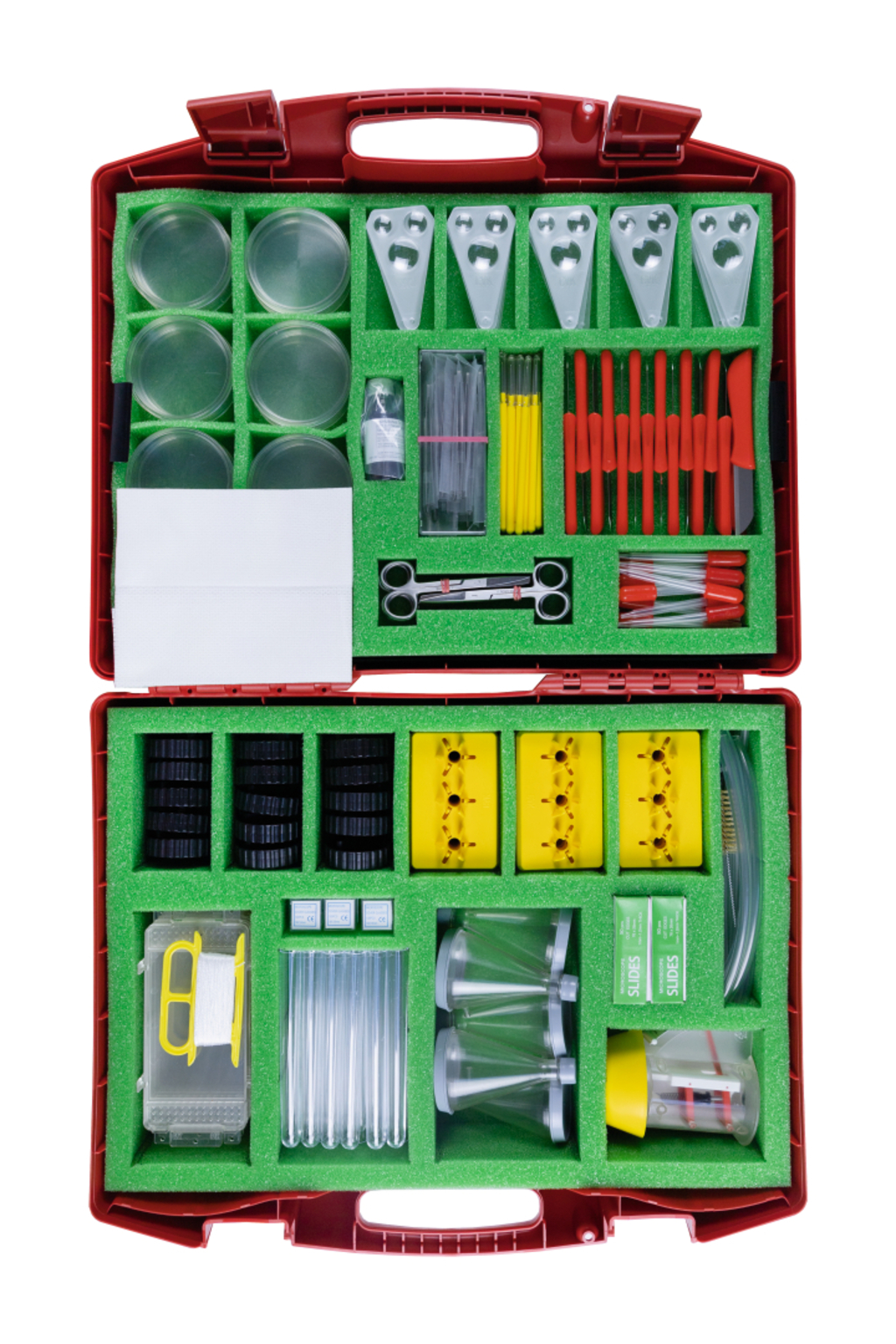


Technical specifications
Size of kit: 540 x 450 x 150 mm
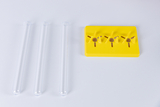
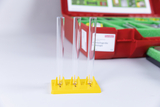
Experiments on plant transpiration.
Observing seeds, buds, blossoms, fruits, bulbs, stalks, and bark in their entirety and in longitudinal and cross-sections.
Observations of living and dead insects and other small animals (anatomy, posture, organs of locomotion like wings and legs, mouthparts, and organs for seeing and feeling).
Use tweezers principally for grasping or holding objects to be examined or observed, especially very tiny objects, instead of using your fingers or hands.
Pressing flowers and other plant parts with one and two cotyledons (seed leaves) for comparison.
Experiments on the function and activity of roots. (e.g. put one plant into water by its roots, and another by its leaves. Compare them after a few hours.)
Creating a humid chamber for germination experiments, insert moistened cotton, for use with seeds and cut stems of different plants.
Cutting longitudinal and cross-sections of parts of plants which grow above or beneath the soil, and mushrooms.
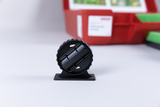
The microtome is a very safe and easy to handle instrument to sectioning botanical material.
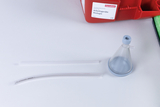
With the pooter, small insects, spiders and seeds can be collected by carefully sucking them into the pooter. To take the specimen out of the pooter, the bottom of the flask can be removed easily.
Objects that are going to be viewed on a microscope slide may be prepared as a wet mount using water. The specimen e.g. a cut from a plant stem is placed in the centre of the microscopic slide.
The dropper is used for occasional moistening of the seeds and for wetting the microscopic slides. The dropper is also suitable for distributing oil on a water surface.
Determining increase and decrease of moisture in bulbs, plant parts and mosses.
- 1 × Water basin, plastic, 80 mm dia.
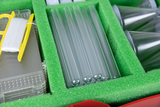
- 3 × Cover glasses, 18/18 mm
- 5 ×
- 15 × Microtome
- 2 × Microscopic slides, 50 pcs.
- 1 × Dial balance, 100 g
- 25 × Triple lens magnifying glass
- 1 ×
- 1 × Plastic box 140/50/35 mm
- 15 × Knife
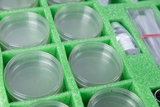
- 16 × Petri dish, plastic
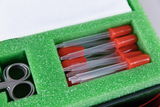
- 15 × Forceps, with blunt points
- 15 × Dissecting needle, straight
- 30 ×
- 15 ×
- 5 × Suction flask
- 10 ×
- 1 × Tread on spool
- 15 × Dropping pipette, plastic
- 1 × Vegetable oil, 30 ml
- 1 × Foam insert 1 f. 18080, 505x355x40 mm, green
- 1 × Foam insert 2 f. 18080, 520x365x90, green
- 1 ×
- 10 × Air-permeable set (lid)
- 1 × Test tube brush
- 5 ×
- 2 ×