Set Berlese-Apparatus including Stereoscope 89930
Collecting and Examining Soil Organisms and Comparing Habitats
Use: Demonstrations and investigations of soil organisms, biodiversity, soil quality and nutrient cycles in biology and science lessons
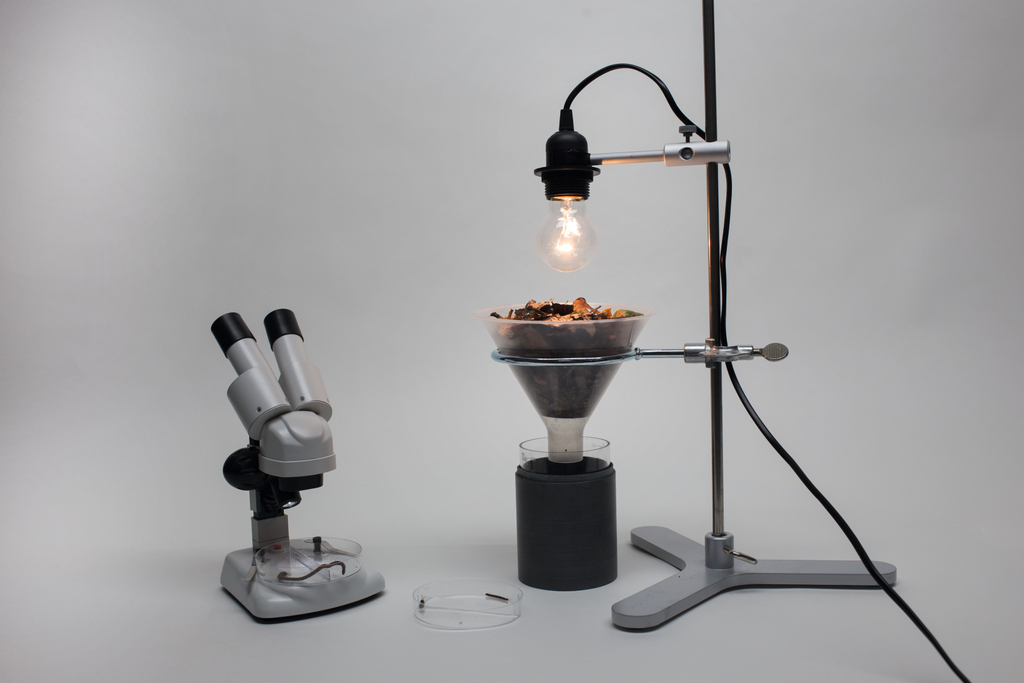
With the Set Berlese-Apparatus including Stereoscope, students can investigate soil samples, collect the small organisms living in them and examine them directly afterwards. The set combines a Berlese apparatus, also known as a Berlese-Tullgren funnel, with a stereoscope, providing a complete workflow from collecting a soil sample to examining the organisms found.
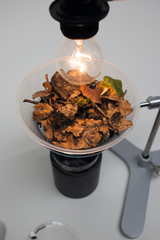
For the investigation, material from the litter layer close to the soil surface, such as leaf litter or coniferous litter, is placed in the funnel. The heat generated by the lamp causes the small organisms in the sample to move through the coarse-meshed sieve into the collection container below.
The collected soil organisms can then be examined using the included stereoscope 89930 and identified with the help of an identification key. Organisms such as small insects, woodlice and springtails can be investigated.
The equipment also enables students to compare different soil habitats. Under normal environmental conditions, the type and diversity of soil organisms found can provide information about biodiversity and soil quality. At the same time, students can examine the importance of soil organisms for decomposition processes, humus formation and nutrient cycles.
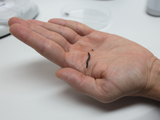
The collected organisms should not be harmed during the investigation and should be returned to the location where the sample was collected afterwards.
Safety and Handling of Organisms
The lamp of the Berlese apparatus becomes very hot during operation and may cause burns. The collected organisms should not be harmed during examination and should be returned to their original habitat afterwards.


- 1 ×
- 1 × Berlese-Apparatus