Student Kit Electronics
Build, investigate and understand electronic circuits
Grade level: 5–10
Number of students: 2–3 students
Use: Student experiments on electronics in one working group
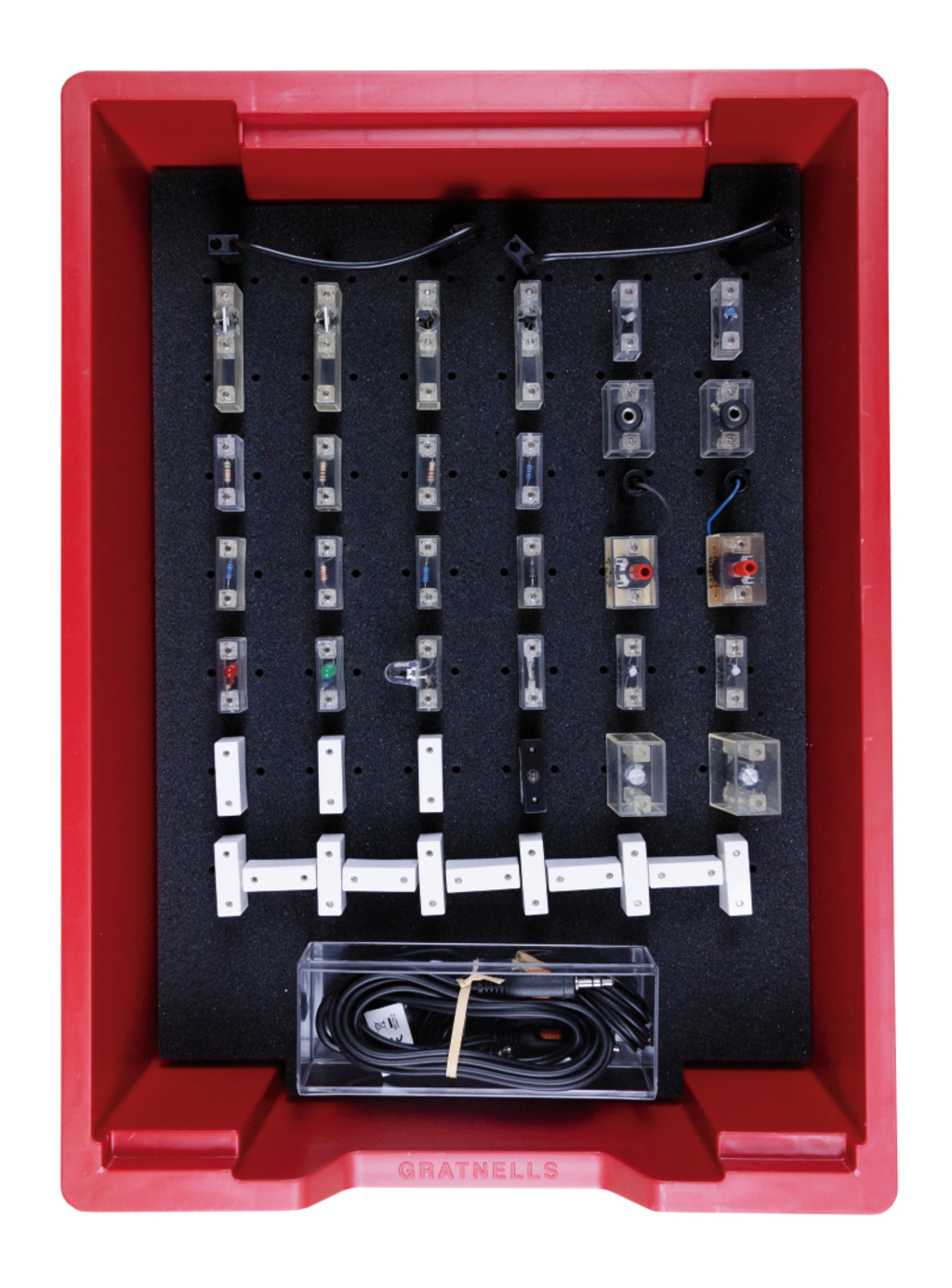
The Student Kit Electronics without circiut board introduces the fundamental principles and components of electronics through practical experiments. Students build electronic circuits independently and investigate how they work. The set provides materials for 46 experiments and is designed for a working group of two to three students.
The experiments cover topics including diode characteristics, voltage dividers and transistor characteristics, as well as the behaviour of NTC and PTC resistors. Further experiments deal with Schmitt triggers, flip-flop circuits, logic circuits and optoelectronics.
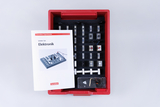
A teacher's guide to the experiments is included with the set and supports teachers in carrying out the experiments in class.
A circiut board is additionally required to conduct the experiments and is not included with this set. If no Universal Plug-in Board is available, we recommend the Student Set Electronics with circiut board.
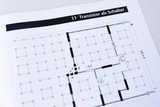
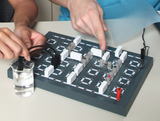


Students assemble the specified circuit and deliberately change its operating conditions. They observe the LED or measure electrical quantities and relate the results to the function of the components. The activity develops careful circuit construction, systematic observation, and evidence-based explanations of technical relationships.
Students systematically test combinations of two input states and observe the LED output. They use the results to derive the corresponding logical operation. Organized recording develops modeling, communication of results, and evidence-based analysis of basic digital circuits.
Students systematically test combinations of two input states and observe the LED output. They use the results to derive the corresponding logical operation. Organized recording develops modeling, communication of results, and evidence-based analysis of basic digital circuits.
Students assemble the specified circuit and deliberately change its operating conditions. They observe the LED or measure electrical quantities and relate the results to the function of the components. The activity develops careful circuit construction, systematic observation, and evidence-based explanations of technical relationships.
Students vary an electrical input quantity step by step, record the corresponding measurements, and plot the data pairs. They use the curve to investigate the component’s characteristic behavior. The activity develops accurate use of meters, structured data analysis, and model-based explanations.
Students assemble the specified circuit and deliberately change its operating conditions. They observe the LED or measure electrical quantities and relate the results to the function of the components. The activity develops careful circuit construction, systematic observation, and evidence-based explanations of technical relationships.
Students assemble the specified circuit and deliberately change its operating conditions. They observe the LED or measure electrical quantities and relate the results to the function of the components. The activity develops careful circuit construction, systematic observation, and evidence-based explanations of technical relationships.
Students assemble the specified circuit and deliberately change its operating conditions. They observe the LED or measure electrical quantities and relate the results to the function of the components. The activity develops careful circuit construction, systematic observation, and evidence-based explanations of technical relationships.
Students assemble the specified circuit and deliberately change its operating conditions. They observe the LED or measure electrical quantities and relate the results to the function of the components. The activity develops careful circuit construction, systematic observation, and evidence-based explanations of technical relationships.
Students heat and cool a temperature-dependent resistor and track the circuit response using an LED or meter. They relate temperature, resistance, and current flow. The activity develops controlled experimentation and evidence-based cause-and-effect reasoning.
Students heat and cool a temperature-dependent resistor and track the circuit response using an LED or meter. They relate temperature, resistance, and current flow. The activity develops controlled experimentation and evidence-based cause-and-effect reasoning.
Students assemble the specified circuit and deliberately change its operating conditions. They observe the LED or measure electrical quantities and relate the results to the function of the components. The activity develops careful circuit construction, systematic observation, and evidence-based explanations of technical relationships.
Students vary an electrical input quantity step by step, record the corresponding measurements, and plot the data pairs. They use the curve to investigate the component’s characteristic behavior. The activity develops accurate use of meters, structured data analysis, and model-based explanations.
Students assemble the specified circuit and deliberately change its operating conditions. They observe the LED or measure electrical quantities and relate the results to the function of the components. The activity develops careful circuit construction, systematic observation, and evidence-based explanations of technical relationships.
Students assemble the specified circuit and deliberately change its operating conditions. They observe the LED or measure electrical quantities and relate the results to the function of the components. The activity develops careful circuit construction, systematic observation, and evidence-based explanations of technical relationships.
Students assemble the specified circuit and deliberately change its operating conditions. They observe the LED or measure electrical quantities and relate the results to the function of the components. The activity develops careful circuit construction, systematic observation, and evidence-based explanations of technical relationships.
Students assemble the specified circuit and deliberately change its operating conditions. They observe the LED or measure electrical quantities and relate the results to the function of the components. The activity develops careful circuit construction, systematic observation, and evidence-based explanations of technical relationships.
Students assemble the specified circuit and deliberately change its operating conditions. They observe the LED or measure electrical quantities and relate the results to the function of the components. The activity develops careful circuit construction, systematic observation, and evidence-based explanations of technical relationships.
Students deliberately vary the illumination of the photoresistor and observe the LED response. They investigate how a light-dependent sensor signal affects an electronic switching stage. The activity supports controlled variation, separation of observation from interpretation, and analysis of technical control systems.
Students deliberately vary the illumination of the photoresistor and observe the LED response. They investigate how a light-dependent sensor signal affects an electronic switching stage. The activity supports controlled variation, separation of observation from interpretation, and analysis of technical control systems.
Students deliberately vary the illumination of the photoresistor and observe the LED response. They investigate how a light-dependent sensor signal affects an electronic switching stage. The activity supports controlled variation, separation of observation from interpretation, and analysis of technical control systems.
Students deliberately vary the illumination of the photoresistor and observe the LED response. They investigate how a light-dependent sensor signal affects an electronic switching stage. The activity supports controlled variation, separation of observation from interpretation, and analysis of technical control systems.
Students deliberately vary the illumination of the photoresistor and observe the LED response. They investigate how a light-dependent sensor signal affects an electronic switching stage. The activity supports controlled variation, separation of observation from interpretation, and analysis of technical control systems.
Students assemble the specified circuit and deliberately change its operating conditions. They observe the LED or measure electrical quantities and relate the results to the function of the components. The activity develops careful circuit construction, systematic observation, and evidence-based explanations of technical relationships.
Students assemble the specified circuit and deliberately change its operating conditions. They observe the LED or measure electrical quantities and relate the results to the function of the components. The activity develops careful circuit construction, systematic observation, and evidence-based explanations of technical relationships.
Students heat and cool a temperature-dependent resistor and track the circuit response using an LED or meter. They relate temperature, resistance, and current flow. The activity develops controlled experimentation and evidence-based cause-and-effect reasoning.
Students heat and cool a temperature-dependent resistor and track the circuit response using an LED or meter. They relate temperature, resistance, and current flow. The activity develops controlled experimentation and evidence-based cause-and-effect reasoning.
Students heat and cool a temperature-dependent resistor and track the circuit response using an LED or meter. They relate temperature, resistance, and current flow. The activity develops controlled experimentation and evidence-based cause-and-effect reasoning.
Students heat and cool a temperature-dependent resistor and track the circuit response using an LED or meter. They relate temperature, resistance, and current flow. The activity develops controlled experimentation and evidence-based cause-and-effect reasoning.
Students assemble the specified circuit and deliberately change its operating conditions. They observe the LED or measure electrical quantities and relate the results to the function of the components. The activity develops careful circuit construction, systematic observation, and evidence-based explanations of technical relationships.
Students assemble the specified circuit and deliberately change its operating conditions. They observe the LED or measure electrical quantities and relate the results to the function of the components. The activity develops careful circuit construction, systematic observation, and evidence-based explanations of technical relationships.
Students assemble the specified circuit and deliberately change its operating conditions. They observe the LED or measure electrical quantities and relate the results to the function of the components. The activity develops careful circuit construction, systematic observation, and evidence-based explanations of technical relationships.
Students assemble the specified circuit and deliberately change its operating conditions. They observe the LED or measure electrical quantities and relate the results to the function of the components. The activity develops careful circuit construction, systematic observation, and evidence-based explanations of technical relationships.
Students assemble the specified circuit and deliberately change its operating conditions. They observe the LED or measure electrical quantities and relate the results to the function of the components. The activity develops careful circuit construction, systematic observation, and evidence-based explanations of technical relationships.
Students assemble the specified circuit and deliberately change its operating conditions. They observe the LED or measure electrical quantities and relate the results to the function of the components. The activity develops careful circuit construction, systematic observation, and evidence-based explanations of technical relationships.
Students assemble the specified circuit and deliberately change its operating conditions. They observe the LED or measure electrical quantities and relate the results to the function of the components. The activity develops careful circuit construction, systematic observation, and evidence-based explanations of technical relationships.
Students systematically test combinations of two input states and observe the LED output. They use the results to derive the corresponding logical operation. Organized recording develops modeling, communication of results, and evidence-based analysis of basic digital circuits.
Students assemble the specified circuit and deliberately change its operating conditions. They observe the LED or measure electrical quantities and relate the results to the function of the components. The activity develops careful circuit construction, systematic observation, and evidence-based explanations of technical relationships.
Students assemble the specified circuit and deliberately change its operating conditions. They observe the LED or measure electrical quantities and relate the results to the function of the components. The activity develops careful circuit construction, systematic observation, and evidence-based explanations of technical relationships.
Students assemble the specified circuit and deliberately change its operating conditions. They observe the LED or measure electrical quantities and relate the results to the function of the components. The activity develops careful circuit construction, systematic observation, and evidence-based explanations of technical relationships.
Students assemble the specified circuit and deliberately change its operating conditions. They observe the LED or measure electrical quantities and relate the results to the function of the components. The activity develops careful circuit construction, systematic observation, and evidence-based explanations of technical relationships.
Students vary an electrical input quantity step by step, record the corresponding measurements, and plot the data pairs. They use the curve to investigate the component’s characteristic behavior. The activity develops accurate use of meters, structured data analysis, and model-based explanations.
Students deliberately vary the illumination of the photoresistor and observe the LED response. They investigate how a light-dependent sensor signal affects an electronic switching stage. The activity supports controlled variation, separation of observation from interpretation, and analysis of technical control systems.
Students deliberately vary the illumination of the photoresistor and observe the LED response. They investigate how a light-dependent sensor signal affects an electronic switching stage. The activity supports controlled variation, separation of observation from interpretation, and analysis of technical control systems.
Students assemble the specified circuit and deliberately change its operating conditions. They observe the LED or measure electrical quantities and relate the results to the function of the components. The activity develops careful circuit construction, systematic observation, and evidence-based explanations of technical relationships.
Students convert an audio signal into varying light or receive that signal with a photodiode. By changing settings, distance, alignment, and the light path, they investigate conditions for signal transmission. They evaluate reproduction quality and use a transmitter-receiver model to explain the system.
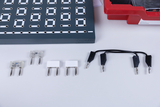
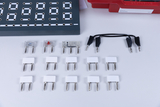
- 14 × Bridge plug
- 1 × Resistor, 100 Ohms, 0,5 W plug-in element
- 1 × PTC resistor plug-in element
- 2 × Plug lead, 10 cm, black
- 1 × Storing Tray shallow, red
- 2 ×
- 2 × Capacitor plug-in-element47 µF, 16 V electrolyte
- 1 × Lid
- 1 × LED plug-in-element,green
- 1 × LED plug-in-element, red
- 1 × Resistor, 51 kOhms, plug-in element
- 2 × Resistor, 5,1 kOhms, plug-in element
- 2 ×
- 1 × LED, white
- 1 × NTC resistor, plug-in element
- 1 × Resistor plug-in-element 1 kOhm
- 2 × Transistor, npn, plug-in element
- 2 × Capacitor plug-in element470 µF/16 V electrolyte
- 1 ×
- 1 × Silicium diode, plug-in-element
- 1 × Resistor, variable 1 kOhm potentiometer output
- 1 × Resistor, variable 10kOhm potentiometer output
- 1 × Photoresistor replacement component
- 1 × Photodiode plug-in elem.
- 1 × Earpiece 32 Ohm
- 1 × Jack lead 3,5 mm
- 2 × Jack socket 3,5mm on plug
- 1 × Foam insert f. 20410/15 385x271x20 mm