Students kit Heat
Investigating Temperature, Thermal Expansion, Evaporation and Condensation
Age: 7–9 years
Grade level: Grades 2–3
Materials: for 15 working groups of 2–3 students each
Use: Student experiments on temperature, thermometers, thermal expansion, evaporation, boiling and condensation in primary science lessons
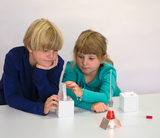
With the Students kit Heat, students investigate fundamental phenomena related to heat and temperature through hands-on experiments. The materials allow 15 working groups to experiment simultaneously and are designed for primary science lessons in Grades 2 and 3.
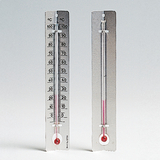
One focus is on thermometers and temperature measurement. Students build a simple thermometer, observe the thermal expansion of liquids and initially develop their own temperature scale. They then learn about the Celsius scale and use ice and boiling water to determine important reference points.
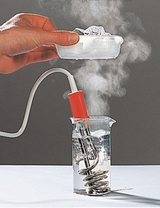
Further experiments focus on evaporation, boiling and condensation. Students observe what happens when a liquid changes into a gaseous state, measure the cooling effect associated with evaporation and investigate different liquids. This provides an experimental introduction to fundamental processes of the water cycle.
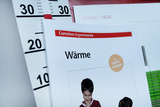
A comprehensive teacher's guide supports lesson planning. Reproducible worksheets and picture stories encourage students to think about, describe and discuss their observations.
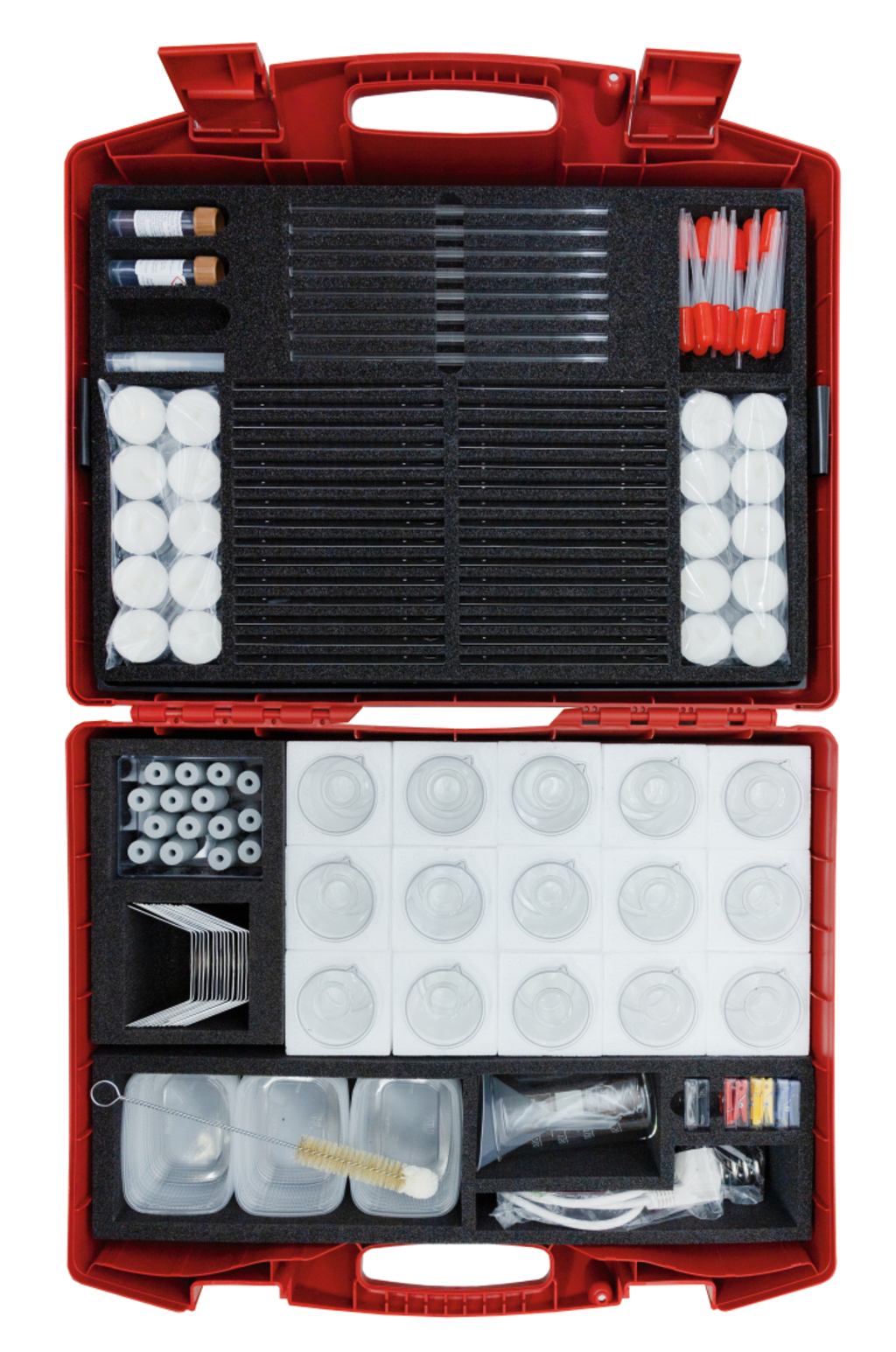


Technical specifications
Size of kit: 540 x 450 x 150 mm
We will shortly provide you with a description of the experiment at this point.
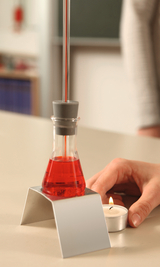
The students should be able to describe the following observations based on their experiments: When the water in the flask was heated, it rose in the glass tube (it expanded); when it was cooled again, it sank (contracted) in the glass tube.
The students should get a feeling for different temperatures.
In the sense of the aforementioned learning objective, the students should be able to make an individual division of the scale and one that corresponds to the consensus of the group and thus be able to measure.
The students measure different temperatures in their environment.
The spirit in the beaker is shown and possibly passed around. The students should try to find out for themselves what the subject is.
The student groups receive the scaleless thermometers and two beakers with water at different temperatures. They take turns holding the thermometers in the glasses and observing them.
The students should be able to use ice and boiling water to mark the melting and boiling points of water on a thermometer without a scale.
We will shortly provide you with a description of the experiment at this point.
The students are asked to formulate a hypothesis about the behavior of a drop of cologne exposed to air.
The students should be able to name different non-potable liquids that are used in their environment.
The students should feel and measure the impression of cooling left by an evaporating liquid.
- 1 × Thermometer model for demonstration
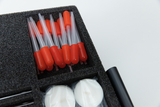
- 15 × Dropping pipette, plastic
- 1 ×
- 1 × Plastic box, 105/90/50 mm
- 1 ×
- 1 × Funnel, PP, 75 mm
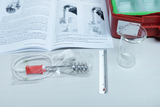
- 1 × Immersion heater, 300 W
- 4 ×
- 15 ×
- 1 × Coloring agent blue (food color)
- 1 × Dye (food colouring), red
- 15 × Graduated plastic beaker, 100 ml
- 1 ×
- 15 × Rubber stopper with 6 mm bore
- 1 ×
- 15 × Thermometer student type –5 to +100 °C
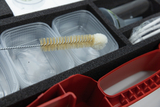
- 1 × Test tube brush, 200/25 mm
- 1 ×
- 1 ×
- 15 × Erlenmeyer flask, Duran 25 ml
- 1 × Beaker, glass, 250 ml
- 15 × Thermometer student type, without graduation
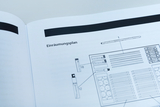
- 1 × Storing diagram,int.vers.
- 15 × Insulating block for plastic beaker
- 15 ×
- 15 ×
- 20 ×
- 15 ×
- 15 ×
- 15 ×
- 16 ×