Students kit Water purification
Investigating Groundwater, Drinking Water Supply and Wastewater Treatment
Grade level: Grade 3 and above
Number of working groups: 15
Use: Student experiments on the water cycle, soil types, groundwater, drinking water supply, water pressure, wastewater treatment and the responsible use of water
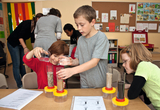
With the Students kit Water purification, students investigate where our drinking water comes from, how it is distributed and what happens to wastewater after use. The materials are designed for 15 working groups and provide a hands-on introduction to an important topic in primary science education.
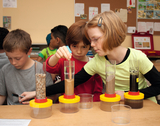
Students begin by exploring the formation of groundwater and the water cycle. Using different types of soil, they investigate how quickly water seeps through, which soils retain or block water and how different soil layers act as filters. The experiments also demonstrate that dissolved contaminants such as salt, oil or detergent cannot simply be filtered out by the soil.
Further experiments focus on drinking water extraction and supply. Students can build a simple model of a well and investigate how the water pressure required to transport drinking water to taps is generated.
In the topic area wastewater, students investigate different stages of water treatment. Model experiments demonstrate processes such as the mechanical removal of coarse materials and the function of a settling tank. This allows students to follow the journey of water from a natural resource through human use to wastewater treatment.
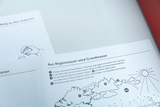
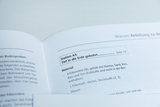
A comprehensive teacher's guide with methodological guidance, practical information and experiment instructions supports station-based learning. Reproducible worksheets are provided for use with the experiments.
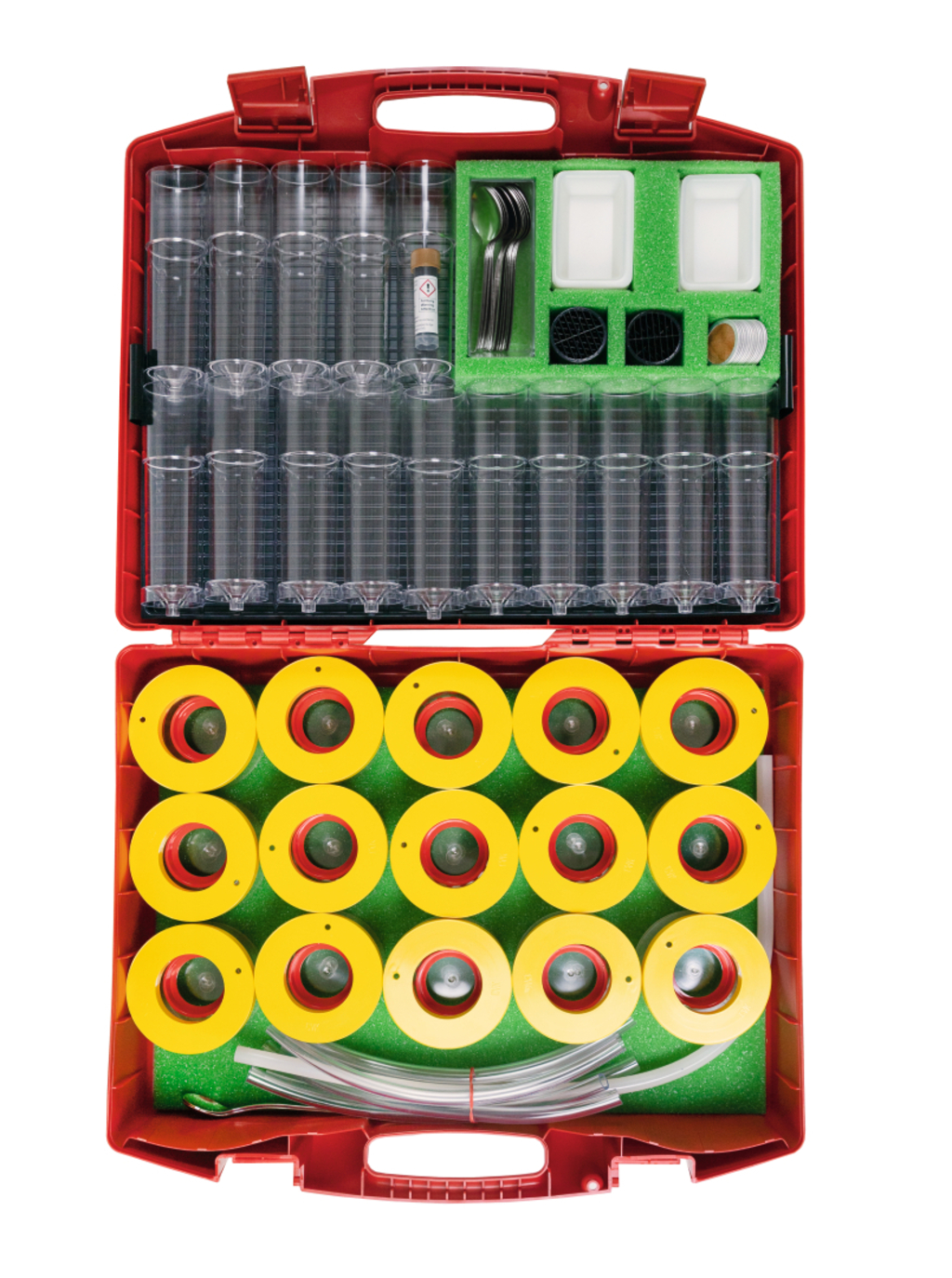





Technical specifications
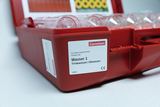
Size of kit: 540 x 450 x 150 mm
With this experiment, children learn how and where groundwater forms.
In the following four experiments, the children recognize that only the clay/loam holds back the water, while the other types of soil let it through and store it. The different rate at which the water seeps away depending on the type of soil is an additional observation.
The children realize that the rainwater ends up being clean, although it should be "dirty" because of the soil it flows through. However, they also recognize that this filtering process does not work with substances that humans bring in, e.g. B. salt, oil, detergent and paint. Students can later conclude that groundwater needs to be protected from such contaminants.
In connection with the formation of groundwater, the formation of rain is also of interest, because this is the only way to close the cycle. All attempts to do this in elementary school have the disadvantage that they only partially represent the processes in a model-like manner and require patience.
With this experiment, which requires a little handicraft work, children can get an idea of how a fountain is built and how it works in principle.
The children get an idea of how the pressure has to be generated with which the drinking water itself reaches the taps in high-rise buildings. One option is to use pumps that have to run constantly. The second option is to first pump the water into a container that is higher than the taps.
Children who have engaged in this experiment should understand why the materials mentioned (and others) must be kept out of the wastewater. Even with our “clean” materials, it is not a pleasant task to have to separate them from the water.
We use edible oil because in reality, like all other edible fat residues, it is removed during washing, but is not eliminated as such and therefore has a share in the sewage treatment plant work. The same goes for the toilet paper. As a result, disposal after the experiment is also easy: it can be done with the waste water.
- 15 ×
- 1 ×
- 15 × Teaspoon
- 15 × Fine sieve (copper wire mesh)
- 1 × Coloring agent blue (food color)
- 15 ×
- 1 ×
- 7 ×
- 2 ×
- 1 × Connecting tube, transparent, 65 cm
- 15 ×
- 1 × Plastic box 140/50/35 mm
- 15 ×
- 15 ×
- 15 × Plastic beaker, 250 ml, with scale
- 15 ×
- 1 × Storing diagram,int.vers.
- 1 × Foam insert for 31802
- 1 × Lidfoam grey,515x355x10mm
- 15 ×