Students kit Balances and equilibrium
Comparing Weights, Exploring Balance and Understanding Weighing
Grade level: Grades 2–3
Number of working groups: 15
Use: Student experiments on weight, balance, grams and kilograms, and the operating principles of seesaws, beam balances, spring balances, steelyard balances and mathematical balances
With the Students kit Balances and equilibrium, students explore different ways of comparing and determining weights. The materials are designed for 15 working groups, allowing students to carry out experiments simultaneously in primary science and mathematics lessons.
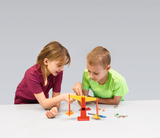
Starting with the principle of the seesaw, children investigate balance and weight distribution. They explore how different objects can be balanced and gradually develop an understanding of how a balance works.
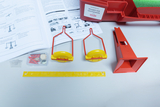
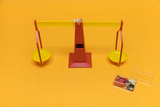
Using beam balances, spring balances, steelyard balances and mathematical balances, students become familiar with different weighing principles. For example, they assemble a beam balance from individual components, adjust it until it is balanced and compare objects as heavier, lighter or equal in weight.
Further experiments introduce the units grams and kilograms. Students work with sets of weights, determine the mass of everyday objects and learn why standardized units of measurement are important. Historical balances and earlier units of weight are also included.
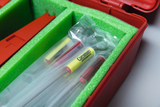
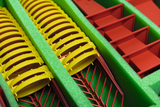
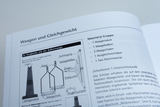
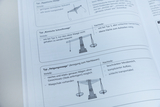
A comprehensive teacher's guide supports lesson preparation and includes worksheets and additional activities. The materials for all 15 working groups are clearly organised in a storage case with foam inserts.
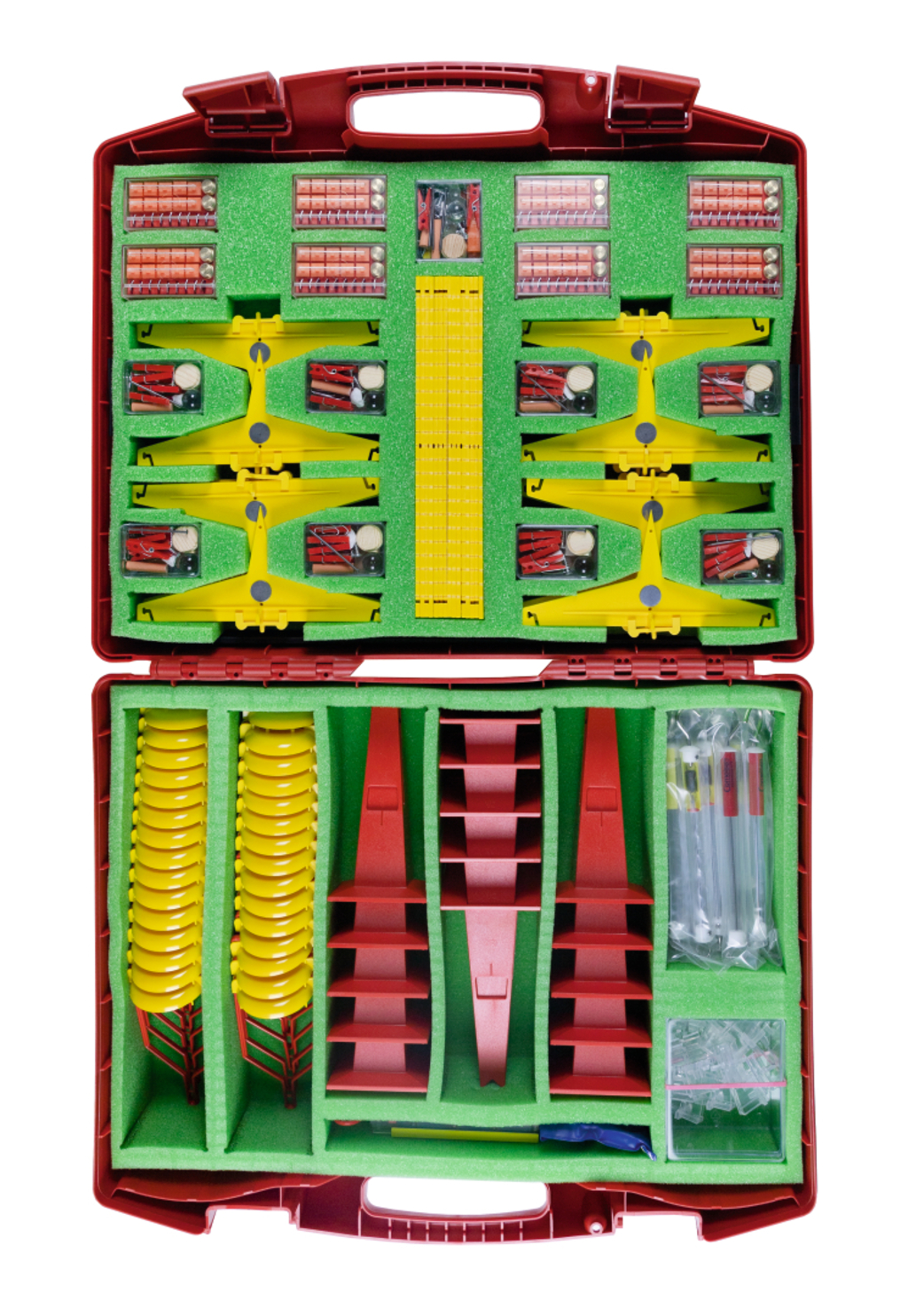


Technical specifications
Size of kit: 540 x 450 x 150 mm
The students should deal with the set of weights practically and mathematically.
The students determine the weight of various objects from their school bag. As a learning objective check, they state the weight of some items from the set of small items.
The students should balance various objects (e.g. ruler, pencil, seesaw beam weighted on one side) on their fingers.
The students should understand real playground situations in experiments with the model seesaw and decide how the presented placement problems can be solved.
Using the calculating scales, the students find out in a playful way: The longer the "arm", the fewer weights are needed to balance the beam. The shorter the "arm", the more weights have to be attached. The arm is always the distance from the load - here the weight cube - to the fulcrum (seesaw beam) referred to.
The students use suitable test materials to recreate a Roman scale that is originally shown in two photos. You will find out when you use them: The "arms" of this type of scale are of unequal length. Weights are superfluous once a scale has been established. The weighing is done by establishing the balance with the help of a slider.
The students build a spring scale from prefabricated parts and make a gram scale themselves. The students recognize that if you hang an object on a spring, it expands. The weight of the object can be deduced from the length of its extension.
The students can put together a beam scale from the given individual parts and balance it with the help of the taring slide ("compensating slide").
Through repeated weighing, the students determine any number of pairs of objects from their school materials for which the relationships "heavier than", "lighter than" or "as heavy as" apply.
We will shortly provide you with a description of the experiment at this point.
The students recognize from two drawings: scales have been around for a long time. The forms changed, but the need to determine weights remained the same.
The students learn that the weights in grams and kilograms were not always common and not common among all peoples and that e.g. T. units of weight based on natural resources were used.
We will shortly provide you with a description of the experiment at this point.
The students experience or determine (e.g. in demonstration weighing) the weights of various objects that either occur in their environment or are of particular interest to them.
- 1 ×
- 15 × Weight set for beam balance
- 1 ×
- 15 × Seesaw bearing
- 15 × Balance stands, plastic
- 1 ×
- 2 × Spring scales, capacity approx. 75 g
- 15 × Balance beam, yellow
- 15 ×
- 1 ×
- 30 × Scale plan, yellow, with bows
- 15 × Seesaw
- 1 ×
- 1 × Plastic box, 105/90/50 mm
- 15 × Balance slider (adjustment rider)
- 13 × Spring scale, 25 g yellow
- 1 × Storing diagram,int.vers.
- 1 × Set of spare parts for balances (in box)