Students kit Air
Investigating the Properties, Pressure and Movement of Air
Age: 6–10 years
Materials: for up to 31 experiment stations
Use: Student experiments on the properties of air, air pressure, negative pressure, compression, recoil and technical applications, as well as the importance of air for life
With the Students kit Air, students investigate fundamental properties of air through a wide range of hands-on experiments. They discover that air is not simply “nothing”, but occupies space, exerts pressure and can transmit forces.
Students explore air pressure, negative pressure and compressed air. Experiments with balloons, syringes, suction cups, valves and air pumps make otherwise invisible processes tangible and easy to observe.
Further experiments focus on the force and movement of air. Using a recoil cart, bottle rocket, air-cushion vehicle and rocket cableway, students can observe how air generates motion and how the recoil principle is used in technical applications. The lift of a hot-air balloon and fundamental principles of flight can also be investigated.
Everyday technical applications such as valves, air pumps and suction cups create a direct connection to familiar situations. Additional stations address air pollution and the importance of air and oxygen for living organisms.
The materials are particularly suitable for station-based learning. The accompanying teacher's guide contains reproducible worksheets for 31 experiment stations and supports students in carrying out the activities independently.
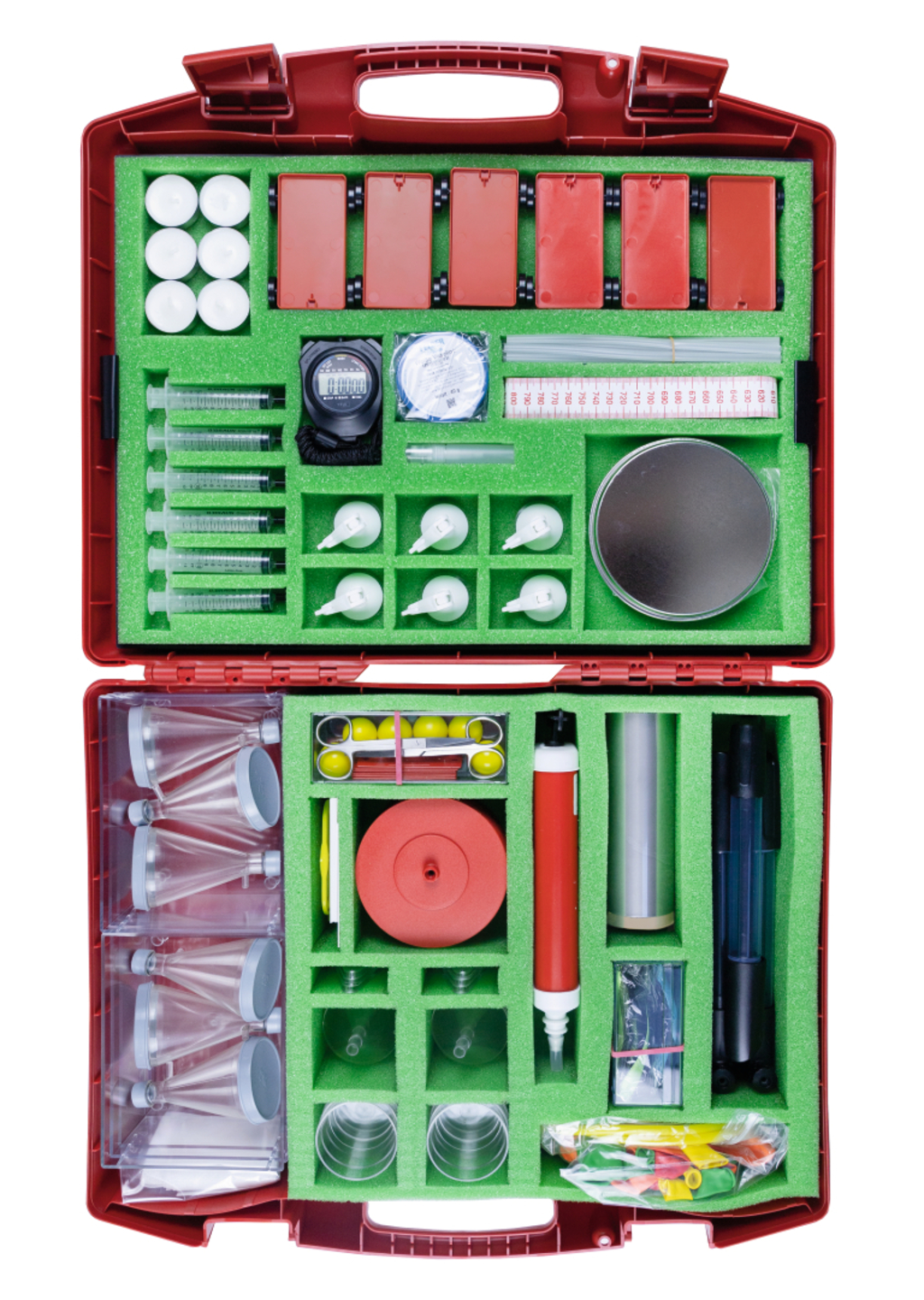


Technical specifications
Size of kit: 540 x 450 x 150 mm
The children get to know different valves and their functions.
We will shortly provide you with a description of the experiment at this point.
We will shortly provide you with a description of the experiment at this point.
We will shortly provide you with a description of the experiment at this point.
One child presses two cups tightly against the balloon, which the other inflates. When inflated, the cups hold up by themselves because the air pressure inside them has been reduced compared to the outside pressure. So the physical phenomenon is similar to that of the suction cup.
The children get to the bottom of the secret of the floating ball.
With a tub and a balloon, the children observe how sunken ships can be lifted.
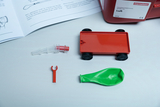
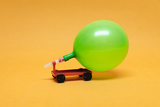
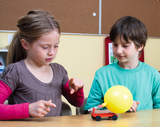
Every child has already experienced recoil on a balloon when it zigzags through the room when it is inflated and released. The reason for this is the fact that every force has an equal but oppositely directed force. With the recoil carriage, the force is directed in one direction.
We will shortly provide you with a description of the experiment at this point.
The children are encouraged by the texts to set up “dirt traps” everywhere, which basically consist of sticky tape that is placed everywhere with the sticky side up and examined with a magnifying glass after a few days.
The children examine the air in a balloon.
This station draws children's attention to the body's constant intake (and release) of air. They should recognize that we constantly have to breathe air and that we can only live for a few minutes without air or oxygen.
In addition to the learning outcome, the children recognize that the water is rising and the candle is going out. She used up some of the air in the cup. The fact that the water rises in the cup proves this, as does the fact that the flame goes out.
We will shortly provide you with a description of the experiment at this point.
Here the children see that air is a body that leaves no room for another – water – if it cannot escape. You will also learn that this experiment is used in technology: If work has to be done under water, you can use the "diving bell", the principle of which becomes clear in this experiment.
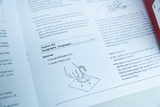
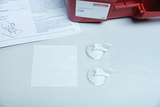
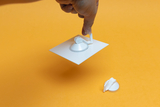
The children examine suction cups and place them on a white plate.
The attempt is only successful if the water is higher than the end of the hose - and if you have created a vacuum there by sucking it in. To do this, put the end of the hose in your mouth and suck until your mouth waters. Now squeeze the hose and hold it in the lower cup.
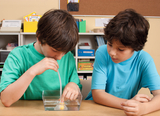
The children examine the air in a syringe and learn that air is a body.
In this experiment, a simple technical device from everyday life is made transparent by operating the "transparent" air pump in this experiment.
Children place a ball of paper in the neck of a feeding bottle and then blow on the neck of the bottle.
The children build their own small rocket ropeway and consolidate the recoil phenomenon.
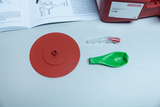
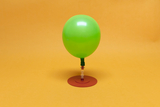
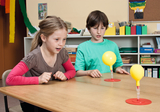
The hovercraft is a technical application of the recoil principle.
We will shortly provide you with a description of the experiment at this point.
We will shortly provide you with a description of the experiment at this point.
We will shortly provide you with a description of the experiment at this point.
- 1 × Rocket model ROKIT
- 1 ×
- 6 × Triple lens magnifying glass
- 6 ×
- 6 ×
- 1 ×
- 1 × Burner
- 1 × Balloons with reinforced surface tension
- 1 × Hot air balloon model
- 1 ×
- 2 ×
- 1 × Heat stack, 150 mm, for Esbit and metal plate
- 6 × Plastic beaker, 100 ml
- 1 × Stop watch
- 1 ×
- 6 × Screen white, plastic
- 1 ×
- 1 × Adhesive tape
- 3 × Tire pump
- 6 × Air-cushion disc
- 2 × Parachutes, with weight
- 6 × Plastic tube
- 2 × Plastic box 140/50/35 mm
- 1 × Tread on spool
- 1 × Plastic box, 105/90/50 mm
- 1 × Tape measure (10 pcs.)
- 6 × Carriage
- 1 × Dry combustibles ESBIT 20 tablets
- 6 × Suction flask
- 1 × Metal plate, 150 mmØ
- 1 × Storing diagram,int.vers.
- 1 × Foam insert 1 for 31710, 505x355x30 mm
- 1 × Foam insert 2 for 31710, 380x365x105 mm
- 6 ×
- 6 ×
- 6 ×
- 6 ×
- 12 ×
- 6 ×
- 6 ×
- 6 ×
- 2 ×
- 6 ×
- 6 ×