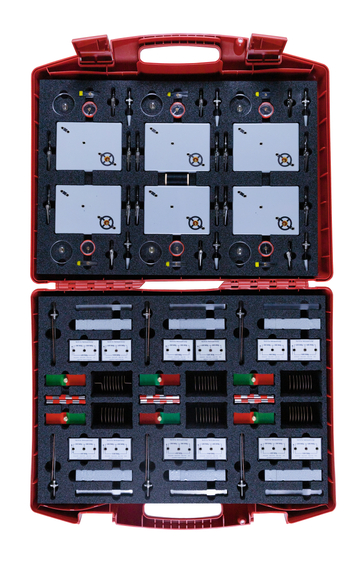
Class Set Magnetism 2.0
Investigating Magnetic Properties, Forces and Magnetic Fields at Learning Stations
Learning format: Station-based learning with an entire class
Number of stations: 14
Use: Student experiments on permanent magnets, magnetic forces, magnetic fields, magnetization, diamagnetism and paramagnetism
With the Class Set Magnetism 2.0, students investigate key topics in magnetism at 14 different learning stations. The experiments range from the fundamental properties of permanent magnets and magnetic forces to investigations of diamagnetism and paramagnetism.
Students explore attraction and repulsion, the strength of magnetic forces, magnetic and non-magnetic materials, as well as the structure and shielding of magnetic fields. Further stations cover magnetization and demagnetization, the Earth's magnetic field and a model of microscopic compass needles. Neodymium magnets with holders allow students to investigate diamagnetic and paramagnetic properties.
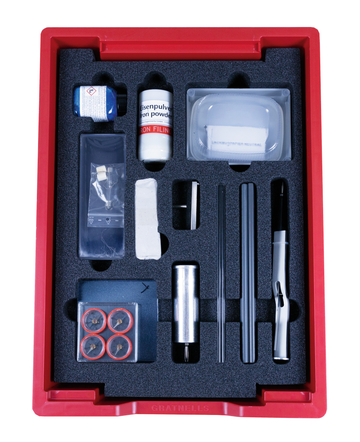
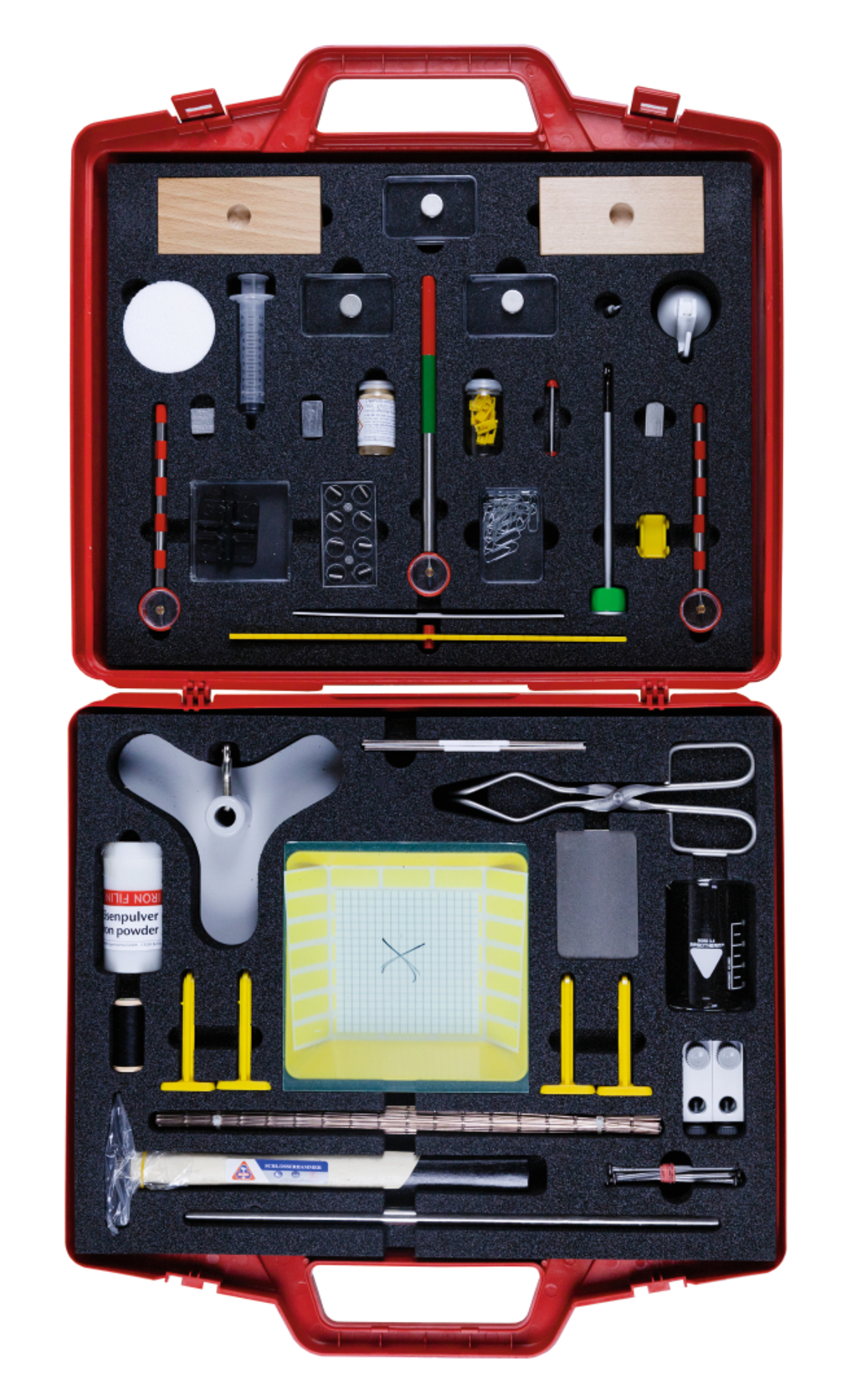
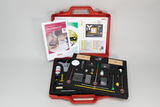
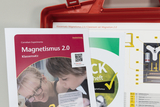
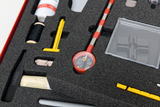
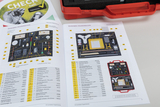
A dedicated check booklet supports students in recording and reviewing their results from the individual stations. The set also includes a teacher's guide with station cards as well as additional tasks and experiments. The materials are clearly arranged in the storage case, making it easy to check that all components are complete.
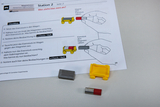

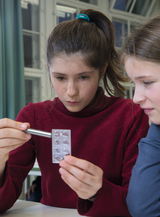



The students each use two small bar magnets to investigate the attraction and repulsion of permanent magnets of comparable strength. To do this, the small bar magnets are brought closer to each other in the four possible orientations.
The students discover that iron attracts the magnet as well as the magnet attracts the iron and thus open up the principle of interaction.
The students examine the strength of the magnetic force at different points along a large bar magnet.
The students examine the material properties of metals and everyday materials. To do this, they use a small bar magnet and first observe the magnetic force acting on the five specified metal strips made of iron, aluminum, copper, nickel and zinc by observing whether these objects stick to the magnet.
The students use a strong neodymium magnet to discover the paramagnetic and diamagnetic properties of aluminum and graphite.
The station first demonstrates that diamagnetic and paramagnetic forces also act on liquids.
The students analyze the magnetic material properties of aluminum and graphite and compare the diamagnetic and paramagnetic forces quantitatively.
According to the station card, the students magnetize a nail using a small bar magnet and demagnetize it by shaking and heating it.
The station copies the experimental procedure from Station 8, replacing the nail to be painted over with the model of microscopic compass needles. In this way, the students should be able to understand the microscopic effect of the macroscopic activity of magnetizing and demagnetizing.
The students examine the magnetic properties of partial magnets using an iron wire that can be broken into individual parts.
The magnetic field of a long bar magnet is studied using iron filings.
The students examine which materials can be used to shield a magnetic field.
The students first deal with the earth and the four cardinal points in the workbook and then build a swimming compass.
In order to practice dealing with coordinates, a timeline on the history of magnetism is made in the check booklet at this station.
- 1 × Slotted mass, 50 g
- 4 × Stands for small magnets
- 1 ×
- 1 × Spool of thread
- 2 × Tubular clips, 5 mm
- 1 × Cross base
- 4 ×
- 1 × Weight holder, 10 g
- 1 × Magnet rod AlNiCo, one each half painted red and green
- 1 ×
- 1 × Metal axle, 50 mm
- 1 × Caster with iron powder
- 2 × Double clamp with slot, aluminium
- 1 ×
- 1 × Iron wires w. notches pack of 100
- 1 × Tripod stand plate with socket and screw
- 1 × Floating platform
- 2 × Water dish
- 1 ×
- 10 × Magnet rod AlNiCo, north pole marked red
- 1 × Thread holder pin
- 1 × Crucible tongs
- 1 × Mass hanger, 1 g
- 1 × Magnetic field model, 68x35x2.5 mm
- 1 × Glass beaker, 100 ml
- 1 × Magnet rod ALCOMAX
- 1 × Screen, transparent, 150x150 mm
- 1 × Set labels, yellow
- 1 × Glass, empty
- 3 ×
- 1 ×
- 1 ×
- 1 ×
- 1 ×
- 2 ×
- 2 ×
- 1 ×
- 1 ×
- 1 ×
- 10 ×
- 2 ×
- 1 ×
- 3 ×
- 1 ×
- 2 ×
- 2 ×
- 1 ×
- 1 ×
- 1 ×
- 3 ×
- 1 ×
- 1 × Carton for storage box, 481x425x107