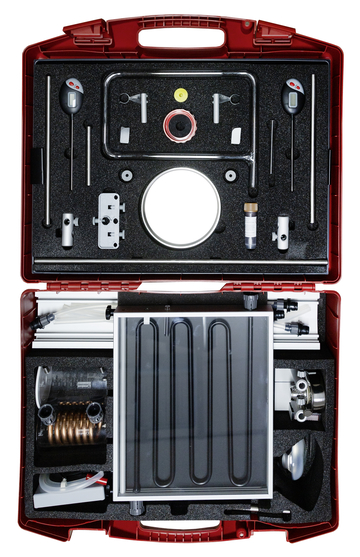
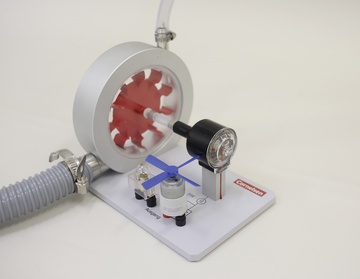
Demonstration kit Photovoltaics
Investigating Photovoltaics and the Use of Solar Energy Experimentally
Use: Demonstration experiments on solar cells, photovoltaics, series and parallel connections, and the conversion and storage of solar energy
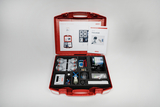
With the Demonstration kit Photovoltaics, you can teach the fundamentals of photovoltaics through clear and practical experiments. The experiments demonstrate how solar cells convert light energy into electrical energy and which factors influence their electrical output.
Students investigate solar cells as voltage and current sources as well as their internal resistance. Further experiments examine the influence of light intensity and angle of incidence, along with series and parallel connections of several solar modules. The solar modules can be continuously adjusted between 0° and 90° on their tilting bases.
The set also enables different forms of energy conversion to be investigated. Solar energy can, for example, be converted into light energy or mechanical energy. Further experiments cover solar hydrogen production and charging a rechargeable battery using solar energy.
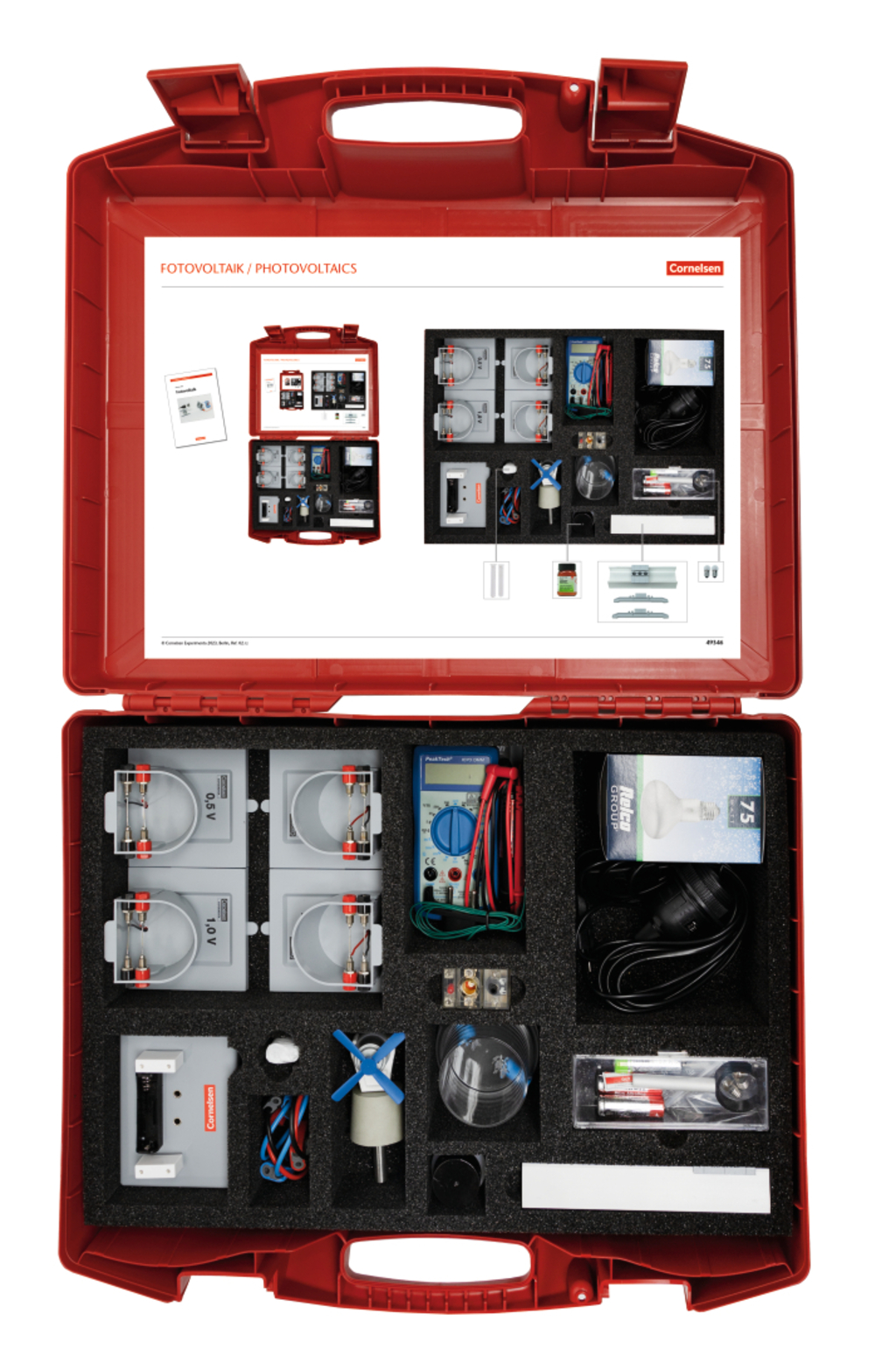
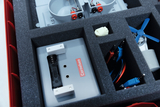
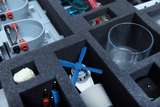
A comprehensive teacher's guide with experiment descriptions, brief evaluations and information on the experimental equipment supports classroom use. The materials are clearly arranged in a sturdy storage case. A storage plan helps ensure that all components can be returned to their correct places after the experiments.
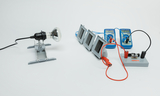


The students investigate the open circuit voltage in series connection of solar modules.
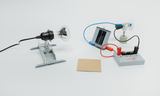
Students investigate the solar cell as a voltage source.
Students investigate the solar cell as a power source.
In this experiment, the solar cell is connected to a multimeter with direct current and placed at different distances from the halogen spotlight.
In this experiment, the solar cell is used as a diode and tested with two different scenarios.
The students investigate the influence of illuminance.
The students observe the influence of the angle of illumination and change the angle of incidence.
This experiment investigates the open circuit voltage versus a solar cell.
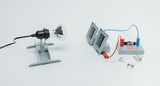
The students investigate the open circuit voltage in parallel connection of solar modules.
How resilient is a solar battery? In this experiment, a solar battery is connected in series with the variable resistor in a closed circuit.
Students observe the conversion of solar energy into light energy.
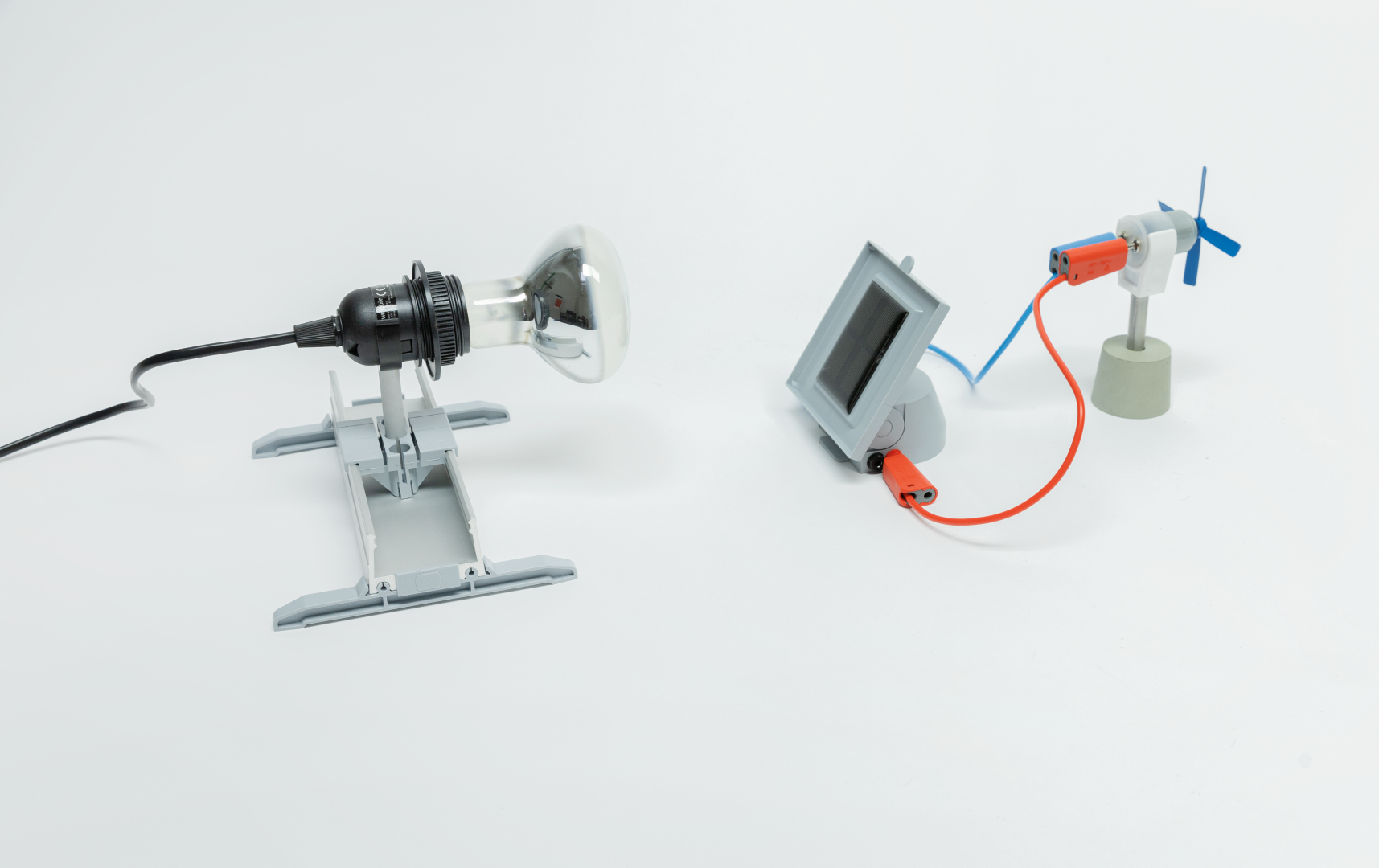
The solar cell is connected to an electric motor to form a closed circuit and the behavior of the electric motor is observed.
The assembled solar battery is placed with full sunlight and the electrodes inside the test tubes are observed.
In this experiment, the voltage output from the illuminated solar battery is allowed to flow through a connected accumulator.
- 1 × AA battery, 1.5 V, alkaline
- 1 × Gas voltameter, student
- 1 ×
- 1 ×
- 1 × Support clip, 30 mm Ø, on rod
- 1 ×
- 1 × Mini Digital Multimeter
- 1 × Lamp Holder MES
- 1 × Profile rail, 180 mm
- 1 × LED plug element
- 1 × Plug lead 25 cm, red
- 1 × Indicator motor with propeller
- 1 × NiCd-Accu rechargeable 1,2 V, 0,5 Ah, KR 15/51
- 1 × Plastic box 140/50/35 mm
- 1 × Base for plug-in elements and battery cell holder
- 3 × Solar cell module, 1 V
- 1 × Citric acid
- 1 × Plug lead, 25 cm, black
- 1 × Plug lead 25 cm, blue
- 1 × Resistor, variable 100 Ohm plug-in element
- 4 × Coil connecting plug
- 1 × Solar cell on stand, 0,5V
- 1 ×
- 1 × Bulb, MES, 1,5 V/0,15 A set of 10 pcs.
- 1 × Foam insert for 49346, 515x360x90 mm
- 1 × Storing diagram,int.vers.(Photovoltaic)
- 1 × Foam insert grey, knobbed515x360x30 mm
- 1 ×
- 2 ×