Students kit Electrical energy sources
Generate and measure electrical energy and understand the relationships
How is electrical energy generated, and how can the resulting voltage be investigated?
With the Students kit Electrical energy sources, students explore these questions independently through hands-on experiments. The materials are easy to use and suitable for grades 5 to 10.
A particularly sensitive voltmeter serves as an indicator of the generated electrical voltage and enables precise measurements during the experiments. This allows students to observe electrical processes directly and develop a clear understanding of the fundamental relationship between current and voltage.
Easy-to-follow experiment instructions support independent experimentation and provide an accessible introduction to the topic of electrical energy. The experiments are designed to be completed within a single lesson, making them easy and flexible to integrate into physics education.
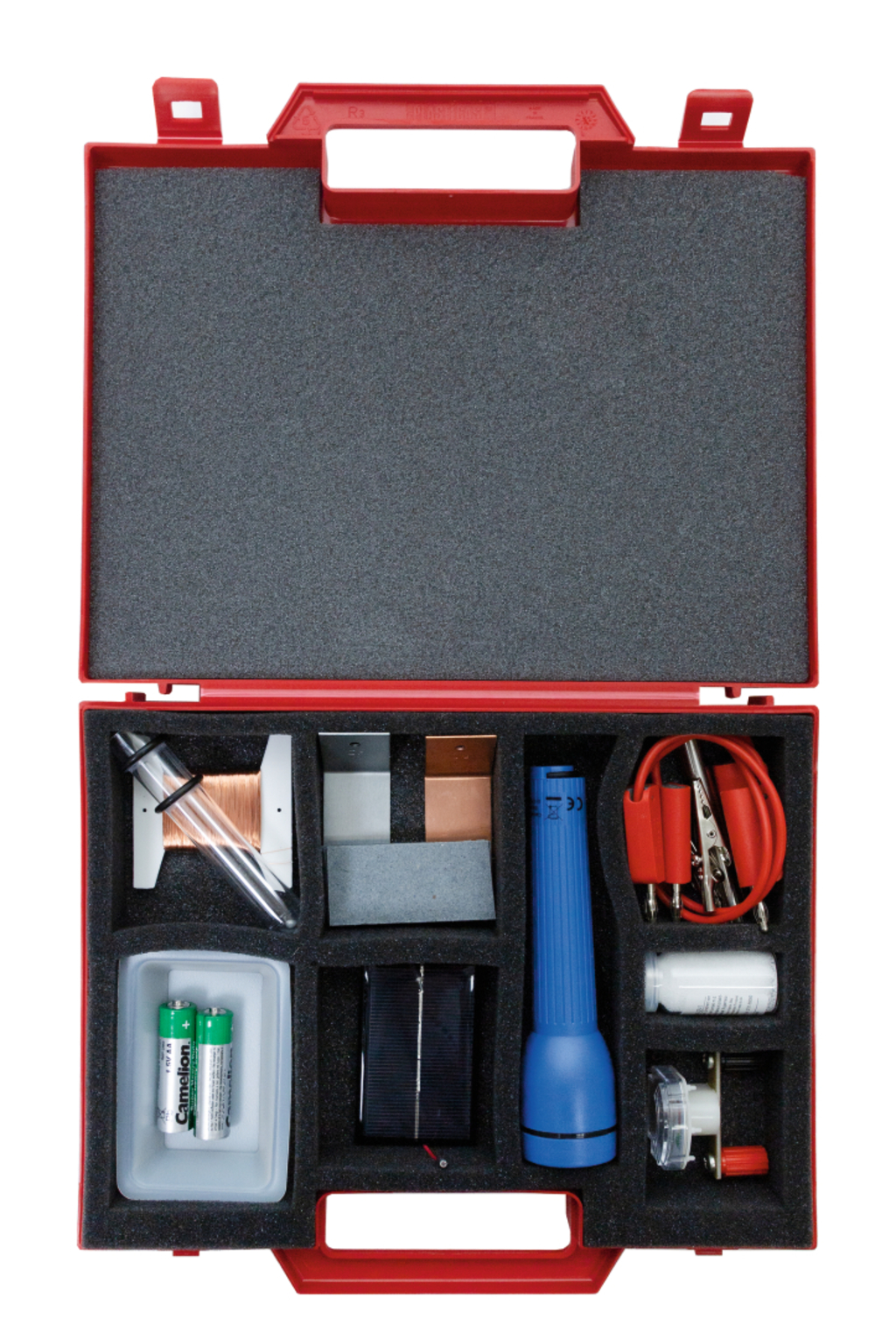

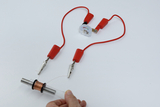
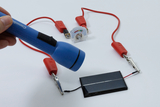
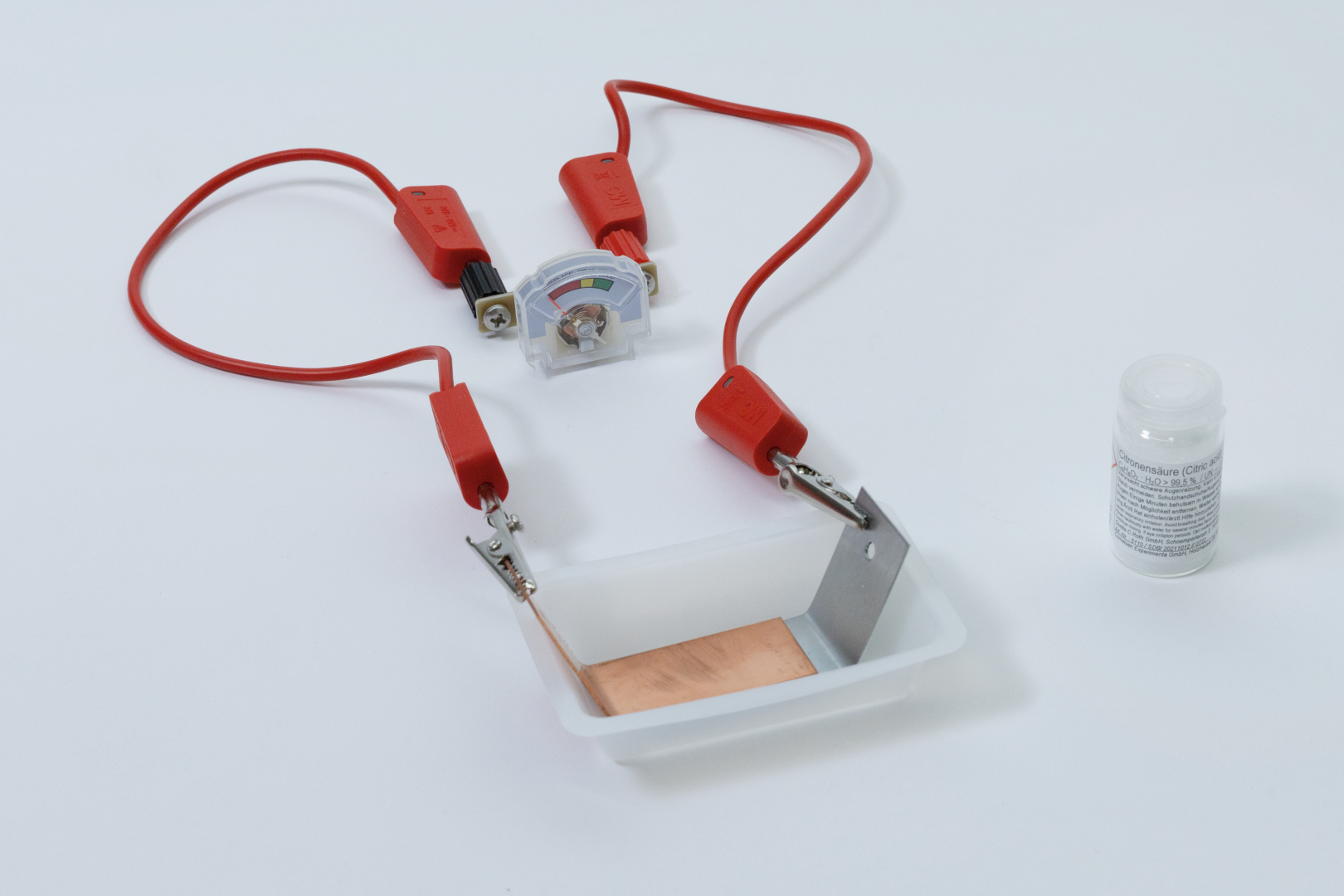


The students observe the relationship between energy supply and current. The experiment makes it clear that the solar cell only converts energy, but does not store it.
The students can be informed that all batteries and accumulators employ similar chemical processes to generate electrical energy for circuits. A battery is said to be “dead” when the chemical reactions in it have ceased, e.g. because the substances arising from these reactions have fully sealed the plate surfaces.
Students should recognize that the nature of this energy conversion is different in principle from the other two types of conversion.
- 1 × Magnet rod ALCOMAX
- 1 ×
- 1 × Zinc electrode, angled
- 1 ×
- 1 ×
- 2 ×
- 1 × Copper electrode, angled
- 1 × Solar cell
- 1 × Copper wire, varnished, 0,25 mm Ø
- 2 × Plug lead 25 cm, red
- 1 ×
- 1 × Plastic tube with 2 rings
- 1 × °Glass with citric acid
- 1 × Lidfoam R3, grey 260x200x10 mm
- 1 × Felt board strips, 10 pcs
- 1 ×