Berlese-Apparatus
Collecting and Identifying Soil Organisms and Comparing Habitats
Use: Demonstration experiments and investigations on soil organisms, biodiversity, soil quality and nutrient cycles in biology and science lessons
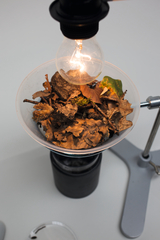
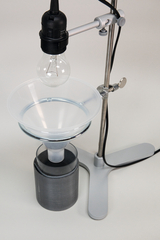
With the Berlese-Apparatus, students can investigate soil samples and the small organisms living in them. Also known as a Berlese-Tullgren funnel, the apparatus is suitable for qualitative and quantitative investigations of soil habitats and for extracting microarthropods from mulch, leaf litter and coniferous litter.
The collected soil material is placed in the funnel. The heat from the lamp causes the organisms in the sample to move through the coarse-mesh sieve into the collecting container below. They can then be examined and identified under a microscope.
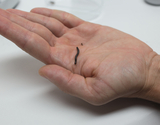
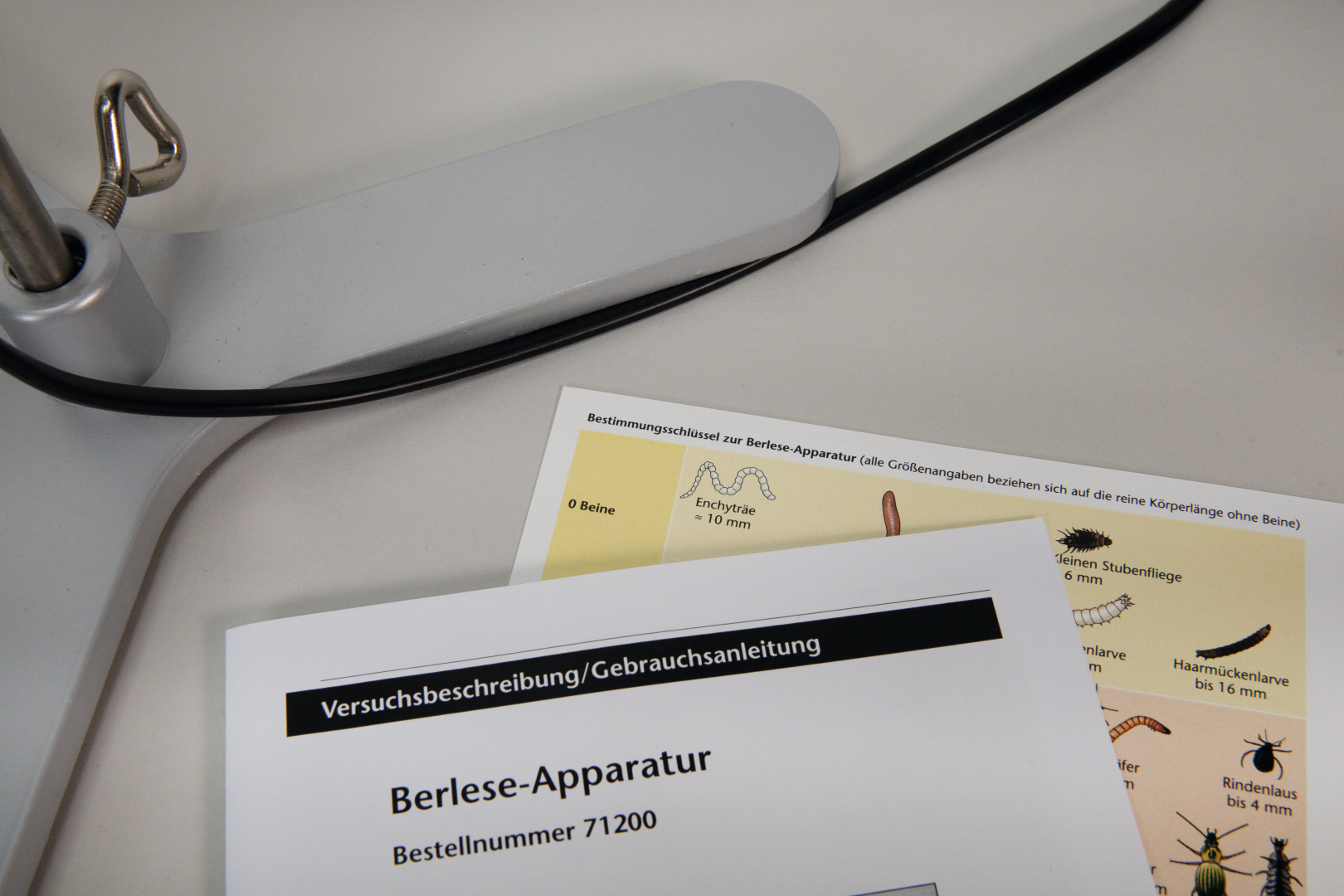
An illustrated, colour identification key helps students identify the collected soil organisms. These may include small insects, woodlice and springtails. Under suitable conditions, the type and diversity of the organisms found can provide information about biodiversity and soil quality.
The Berlese-Apparatus can also be used to investigate ecosystems and nutrient cycles. Soil organisms play an important role in breaking down organic material, decomposition processes and humus formation, allowing students to relate their observations to broader ecological processes.
Brief instructions and the identification key support students in carrying out and evaluating their investigations.
Safety and Handling of Organisms
The lamp becomes very hot during operation and may cause burns. The small organisms collected should not be harmed during the investigation and should be returned to the location where the sample was collected afterwards.
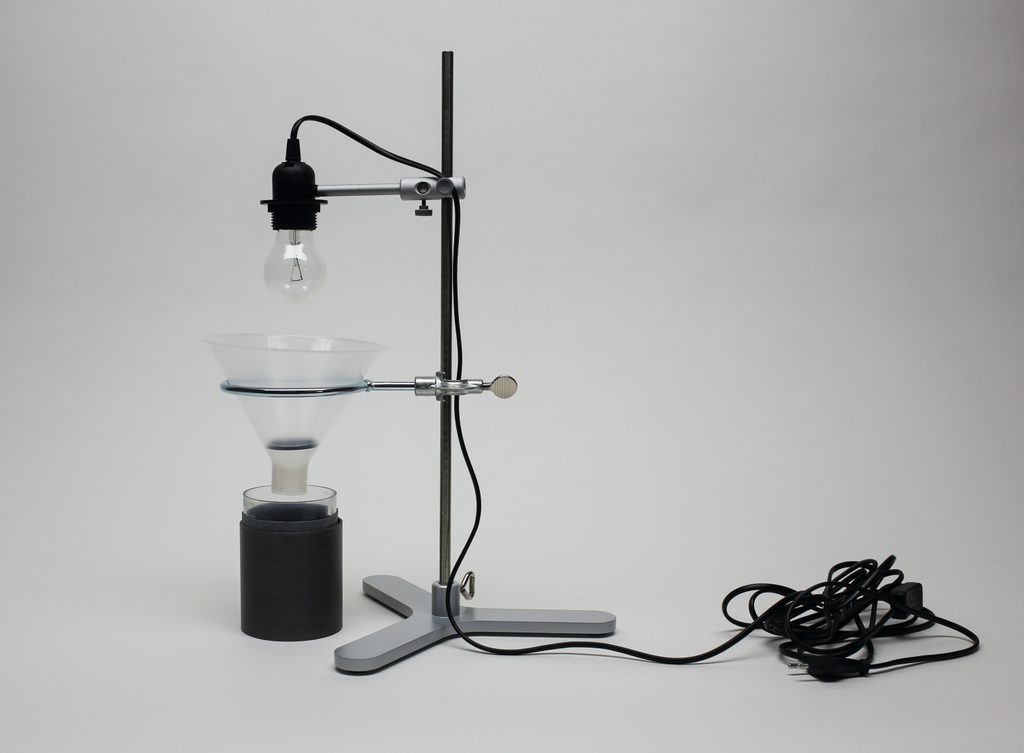


- 1 × Felt sheet
- 1 × Tripod stand with socket and screw
- 1 × Round sleeve, double
- 1 × Stand rod, 500x10 mm dia. stainless steel
- 1 × Beaker, 500 ml with 2 scales
- 1 × Bulb 230 V/ 60 W, ES clear glass
- 1 ×
- 1 × Ring with bosshead
- 1 ×
- 1 × Tube, grey, 95x90mmØ
- 1 ×
- 1 ×
- 1 ×
- 1 ×
- 1 ×