Student Set Plants, Animals and Habitats
Discover, investigate and understand plants and habitats
How do plants absorb water? What conditions do seeds need to germinate? And what can soil and water tell us about a habitat? With the Student Set Plants, Animals and Habitats, students explore these questions independently through hands-on experiments.
The experiments provide a practical introduction to plants, seeds and germination, water and soil as habitats. Students investigate topics such as water uptake and transport in plants, different types of soil and water quality. The set is particularly suitable for integrated science lessons in grades 5 and 6.
Detailed experiment instructions with reproducible worksheets and a teacher’s guide support easy implementation in the classroom.
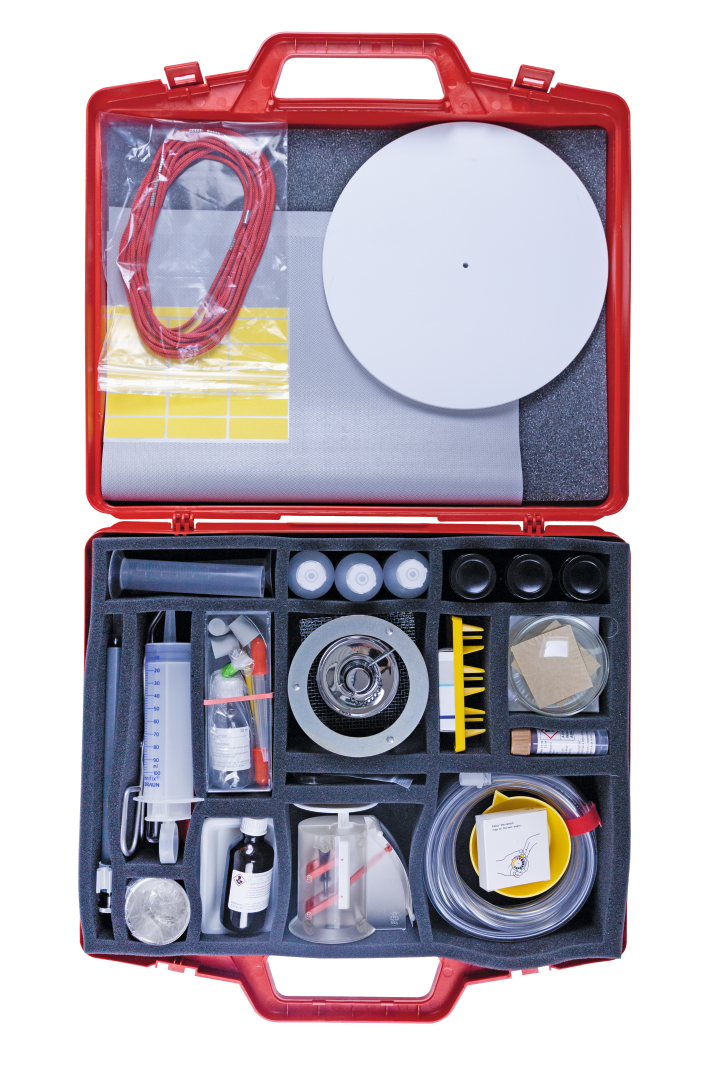
The set is designed for students aged 11 to 14 and contains materials for one working group or demonstration.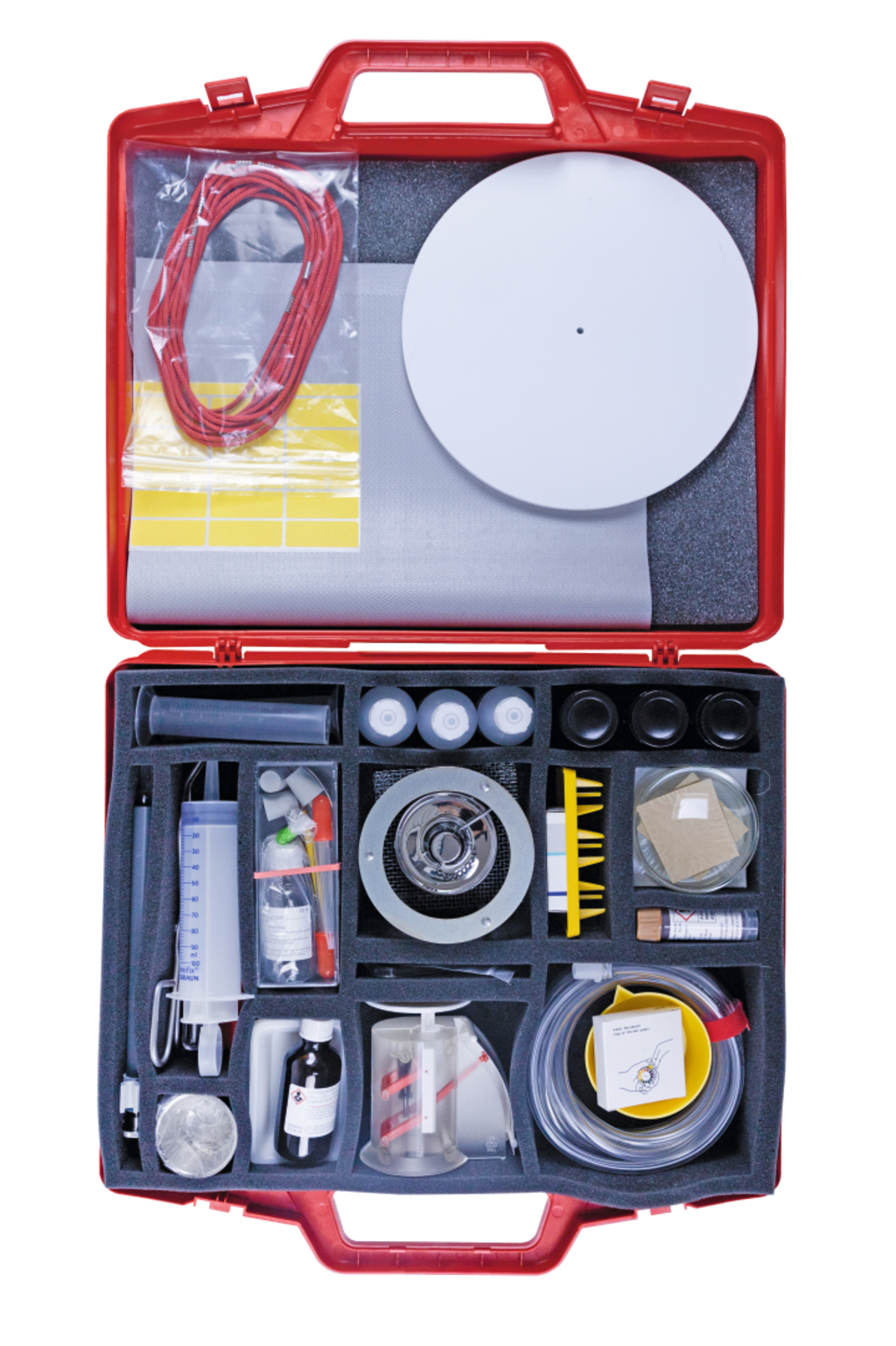

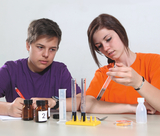
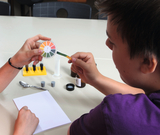
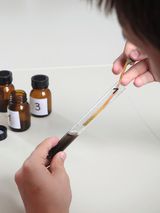


Students examine a flower with a magnifying glass and dissect it step by step from the outside inward using tweezers and dissecting needles. They arrange the sepals, petals, stamens, and carpels according to their positions, draw a floral diagram, and label the parts. This develops precise observation and accurate documentation of biological structures as they relate each part to protection, pollination, and reproduction.
Students place a rooted plant in a graduated cylinder and compare its water level over two days with a control cylinder without a plant. A thin oil layer prevents evaporation in both cylinders, ruling out an alternative explanation for water loss. Through this controlled comparison, students practice keeping variables constant, recording measurements over time, and attributing water uptake to the roots based on evidence.
Students first test the color response of a WATESMO test strip with drops of water and then place a fresh leaf between a second folded strip. After ten minutes, they compare discoloration at the contact points with the reference response. They practice using a substance test, distinguish observation from interpretation, and infer that leaves release water through openings in their surface.
Students germinate bean seeds on moist filter paper for two to three days and examine the young roots with a magnifying glass. They draw a selected root and distinguish the root tip, growth zone, root hair zone, and branching zone. By linking detailed observation with function, they develop their ability to identify biological structures and explain how root hairs support anchorage and the uptake of water and nutrients.
Students sow cress in four germination dishes and systematically vary light, temperature, and soil moisture. For five days, they compare the onset of germination, growth, and green coloration and document selected seeds in drawings. This multivariable comparison develops their ability to distinguish experimental conditions, analyze observational data, and justify water, warmth, and light as requirements for germination and development.
Students lower a viewing disc into different bodies of water and use the marked plumb line to read the depth at which the disc is just visible. They also record flow, algal growth, turbidity, and visible pollution. When comparing sites, they practice estimating between scale marks, organizing field data, and critically assessing how visibility depth can indicate water quality.
Students collect soil samples at three sites, moisten small portions, and examine color, graininess, malleability, and tactile properties. Using specified criteria, they classify the samples as sand, loam, or clay and identify possible mixtures. They develop criteria-based classification, systematically document qualitative sensory data, and explain deviations through natural and human influences on soils.
In this teacher demonstration, three soil samples receive five drops of 10% hydrochloric acid solution while students observe the strength and duration of effervescence. Students use a specified reaction scale to classify the samples as lime deficient, lime-containing, or lime rich and relate lime content to calcium carbonate. They practice criteria-based evaluation of a chemical reaction and reflect on why hazardous substances, protective measures, and teacher control are required.
Students place freshly cut flowering shoots in tinted and clear water and document changes at 30-minute intervals for one day. Increasing coloration of the flowers in the experimental cylinder makes water transport from the stem to the flower parts visible, while clear water serves as a control. Students learn to record time-dependent observations in a table, test alternative explanations, and draw an evidence-based conclusion from a control experiment.
Students describe and measure a dry bean seed, soak it in water for one day, and then compare its length, surface, and appearance. They open the seed coat, examine the seed leaves, radicle, hypocotyl, and embryonic leaves, and record the structure in a labeled drawing. The before-and-after comparison develops their ability to combine qualitative and quantitative data and explain seed structure, storage function, and the onset of germination.
Students soak and open a bean seed and apply iodine solution to both seed leaves. The resulting bluish-black coloration provides a specific test for stored starch. Students practice carrying out a detection procedure correctly, interpreting a color response with a known indicator, and explaining starch as a nutrient and energy reserve for the seedling.
Students germinate five swollen bean seeds on moist filter paper in a warm, bright place. Over several days, they examine one selected seed in the morning and afternoon and document six stages in drawings. This continuous observation series develops their ability to sequence biological changes, describe characteristic features precisely, and explain conditions required for germination and growth.
Students weigh 50 g of each dry soil sample and separate it sequentially with three sieves of different mesh sizes. Each retained fraction is weighed again and classified by grain size as coarse or fine gravel or sand. Students practice a systematic separation method, create a quantitative material balance, and compare grain-size distributions between sites.
Students weigh 30 g of dry soil, completely incinerate it in a crucible, and determine the remaining mass after cooling. They calculate the humus content of three site samples from the mass difference before and after incineration. They practice safe use of a scale and open flame, apply a difference measurement, and assess the relationship between organic content, humus formation, and plant growth.
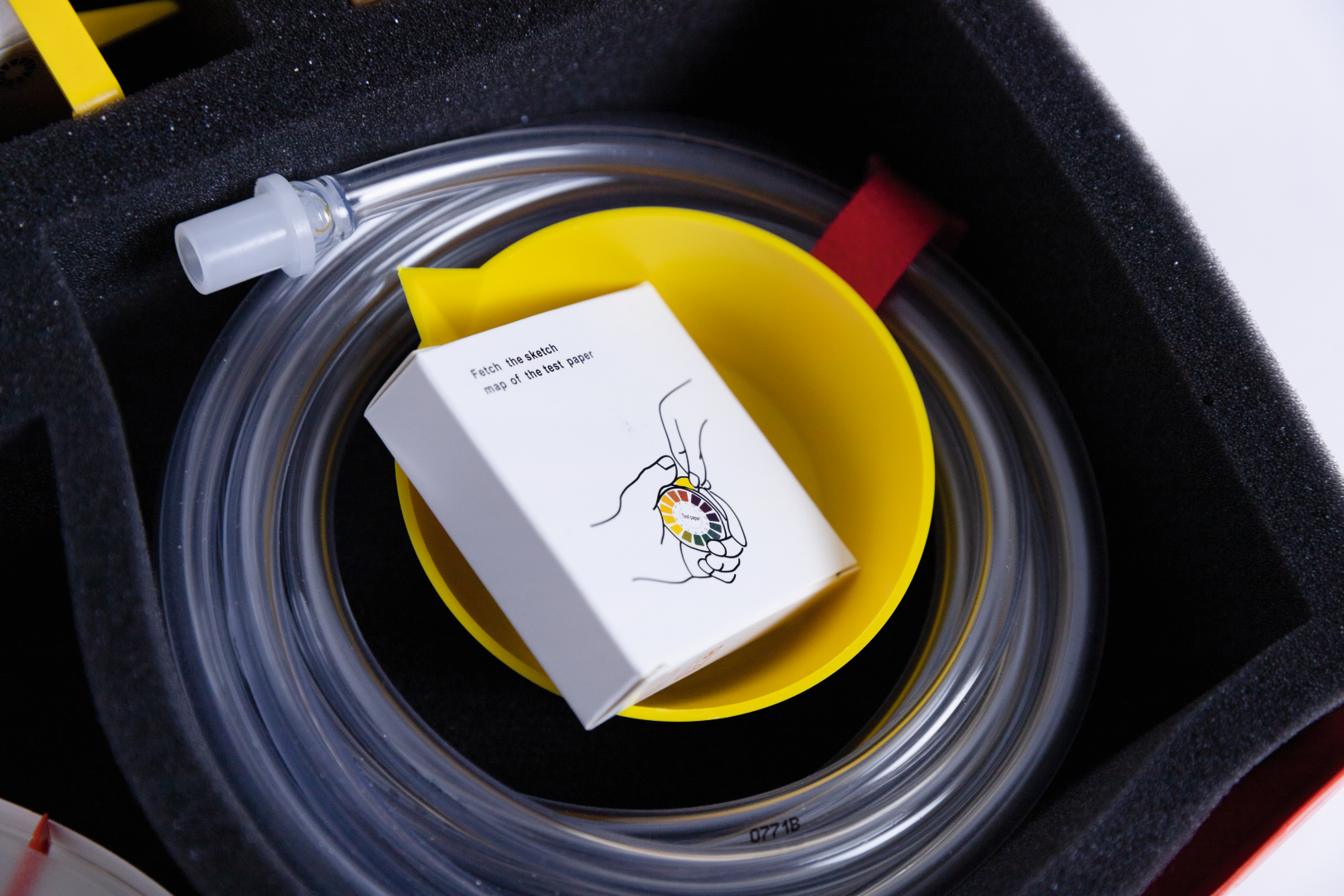
Students shake numbered soil samples with 15 ml of distilled water and allow the soil particles to settle. They compare the color of universal indicator paper with a scale and classify the samples from strongly acidic to strongly alkaline. They develop skills in standardized sample preparation, reading a measurement scale, and relating pH values to the suitability of soils for different plants.
Students search soil samples from three sites for small living creatures using a magnifying glass and dissecting needle. They name or describe their findings, make sketches, and compare types and numbers between samples. This develops systematic observation and documentation of biodiversity and supports evidence-based links between site conditions, soil fertility, decomposition, and humus formation.
Students use a hose and syringe to collect water samples from different depths and label their origin and sampling depth. They compare odor, discoloration, and turbidity of the shaken samples against the light and record the characteristics in a table. They develop competence in standardized sampling, criteria-based comparison of qualitative data, and evidence-based yet cautious assessment of water quality.
Students lower a thermometer on a marked plumb line to different water depths and record depth, temperature, and characteristics of the water body. They compare data series from standing and flowing as well as clear and turbid waters and look for temperature stratification. They develop skills in systematic profile measurement, consider rapid temperature changes during removal, and assess the limits of using one variable to judge water quality.
- 1 ×
- 1 × Petri dish, plastic
- 1 × Heat protection gauze
- 3 ×
- 1 × Dial balance, 100 g
- 1 × Crucible tongs
- 3 × Rubber stopper 18/14 mm
- 1 × Plastic box 140/50/35 mm
- 3 ×
- 1 × Dissecting needle, straight
- 1 × Triple lens magnifying glass
- 2 × Dropping pipette, plastic
- 1 × Syringe with nozzle, 100 ml
- 1 × Universal indicator paper
- 1 × Tripod stand
- 1 ×
- 1 ×
- 1 × Forceps, with blunt points
- 2 × Measuring cylinder, PP, 25 ml
- 1 × Dissecting needle, lancet shape
- 1 × Knife
- 4 ×
- 1 × Dye (food colouring), red
- 3 × Glass bottle, brown, wide neck, 50 ml
- 3 × Watch glass, 80 mm
- 1 × Pack filter papers (100 pcs.)
- 1 × Teaspoon
- 1 ×
- 1 × Water basin, plastic, 80 mm dia.
- 1 × Spirit burner, metal
- 1 × Heat-resistant pad
- 1 × Carton for storage box, 481x425x107
- 1 × Foam insert for 22024 426x325x65 mm
- 1 × Metal crucible 50mmØ
- 1 × Foam insert grey, 430x320x10 mm
- 1 × °Iodine solution, 50 ml
- 1 × Vegetable oil, 30 ml
- 1 × Watesmo-test, 1 roll
- 1 × Lowering cord, 5m
- 1 ×
- 1 ×